
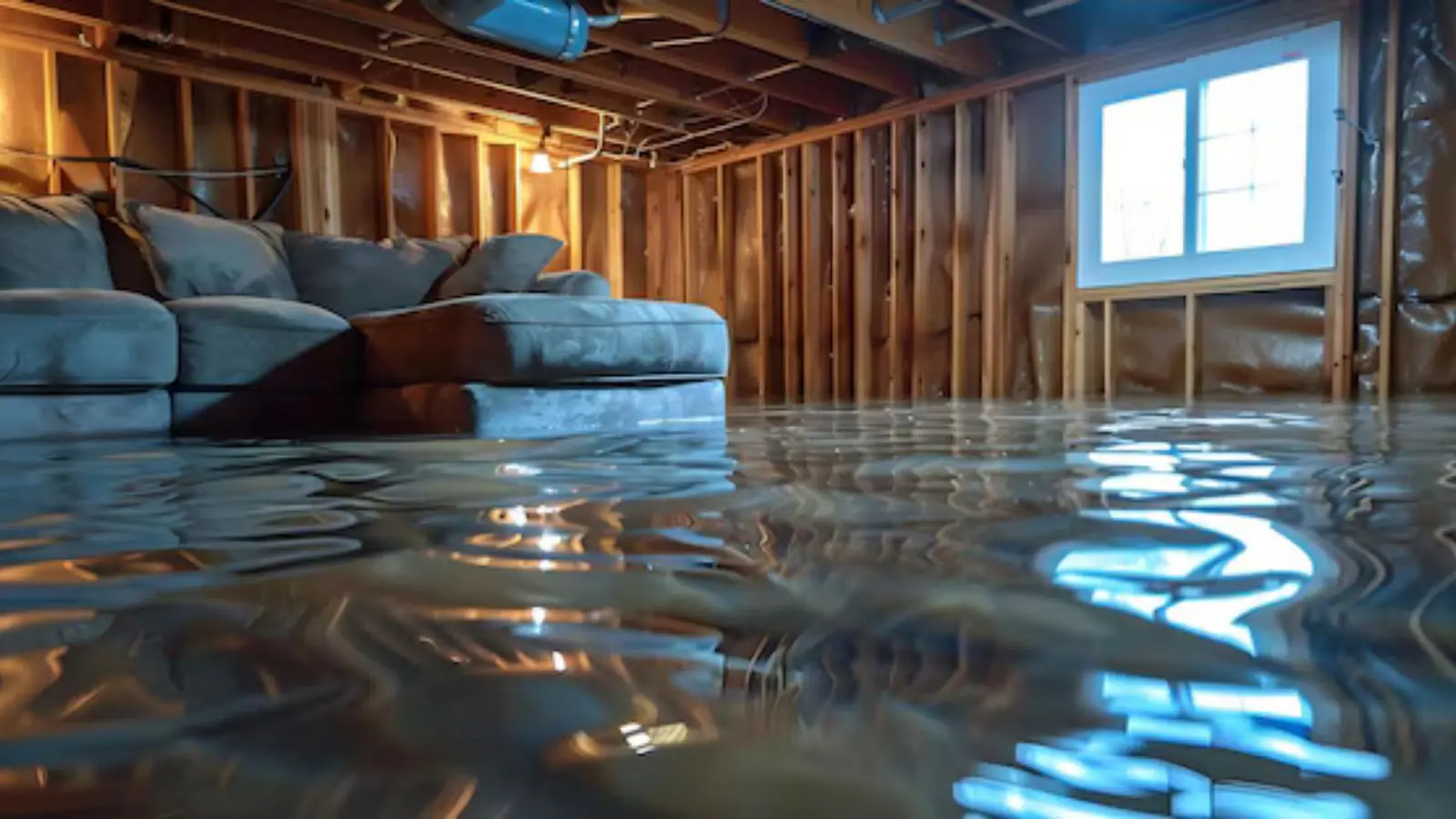
When standing water is an emergency
If water is spreading through your home right now, treat it as an emergency, because wet drywall and subfloor begin to break down fast. Our 24/7 dispatch line is (972) 945-2885, with same-day response when available. While you wait, close the main water shutoff, lift valuables off wet floors, and keep people and pets out of any water that could be contaminated.
Turn off breakers for the wet rooms only if the panel is dry and you can reach it without stepping through water. Photos and a short video can wait until the source is stopped.
Stay out when water meets electricity or sewage
If water is touching an electrical panel, outlets or a ceiling fixture, or you smell gas, leave the area. Call the electric or gas utility or 911 first, and call the restoration line after that.
If the water came up through a floor drain or toilet, it is sewage. Do not wade in it, do not try to wet-vac it, and keep children and pets away until trained crews with protective gear handle it.
Ceiling stain spreading, carpet soaking, wall feels damp?
A brown ring that grows on the ceiling, carpet that squishes underfoot, baseboards that look swollen or a wall that feels cool and clammy all point to the same thing: moisture is trapped in building materials. The trade term for what comes next is water mitigation, which means limiting the loss by removing the water, drying the structure and measuring the result.
Need water mitigation in Little Elm?
Call the 24/7 line.
What happens in the first 24 to 72 hours
- Stop the source.
- Assess the loss. Crews check which materials are wet and which water category the source belongs to under ANSI/IICRC S500.
- Extract. Extraction units pull standing water off hard floors and carpet.
- Remove what cannot be saved. Soaked pad and saturated drywall at the floor line often come out early.
- Set up drying. Air movers, LGR dehumidifiers and, where needed, wall cavity drying equipment go in and run around the clock.
- Map and monitor. Readings start on day one and are repeated at each visit until the targets are met.
Structural drying: air movers, LGR dehumidifiers and wall cavities
Drying is a controlled process, not a matter of pointing a fan at a wet room. Air movers push dry air across wet surfaces to lift moisture off them. LGR dehumidifiers, which stands for low grain refrigerant, then pull that moisture out of the air and send it out as water in a drain line, so the room does not simply recirculate humidity.
Wall cavities are the hard part. Water wicks up drywall and collects behind baseboards, where room air cannot reach. Crews drill small holes or lift a strip of baseboard, then feed dry air into the cavity with specialty equipment.
Drying goals are set from a dry reference reading taken on an unaffected wall or floor in your own home, since materials vary. Wet materials are brought back toward that reference, and the dehumidifier output and room temperature are logged. Most structural drying runs about three to five days, though thick subfloor or hardwood can stretch it.
Keep the equipment running and the doors closed. Switching machines off overnight is a common way a drying job stalls.
Moisture mapping and documentation
Moisture mapping means measuring and recording how wet each material is, then marking those points on a floor plan or photo log. A pin or pinless moisture meter reads drywall, wood and subfloor. A thermal imaging camera shows cold spots that suggest moisture behind a surface, but it only guides the meter.
Readings are repeated on every visit, so you see numbers fall from day to day. When the same spots read at your dry reference level on two checks in a row, drying is verified and the equipment can leave. Ask for a copy of the log and photos for any claim.
Water class and category: what each means for the drying plan
| Class or category | What it describes | What usually happens |
|---|---|---|
| Class 1 | Small area, low-porosity materials | Light extraction, a few air movers |
| Class 2 | Whole room of carpet and pad, water wicked up walls | Extraction, pad removal, air movers and LGR dehumidifiers, cavity checks |
| Class 3 | Water from above, ceilings, walls, insulation and floors all saturated | Wet ceiling and insulation often removed, heavier drying, longer monitoring |
| Class 4 | Deep saturation in dense materials like hardwood, plaster or concrete | Specialty drying, extended timeline, frequent readings |
| Category 1 | Clean source such as a supply line | Dry in place where possible |
| Category 2 or 3 | Gray water (dishwasher, washer) or black water (sewage, rising flood water) | Contaminated porous materials are removed, areas cleaned and treated |
Class is how much material is wet, category is how clean the water was, and a job has both. For cleaning and tear-out after the water is stopped, see our water damage cleanup service.
What drives the cost of water mitigation
Water category
Gray or black water adds removal, cleaning and protective steps that clean supply water does not.
Area and materials
Carpet, hardwood, drywall, insulation and concrete all dry at different speeds.
Drying days
Equipment stays until readings reach the target, so longer drying raises the total.
Equipment count
Larger or deeper losses need more air movers and LGR dehumidifiers.
Access and timing
Wet ceilings and crawl spaces change the scope, which is why an assessment comes first.
Coverage turns on how the water arrived. A pipe that bursts or a washer hose that lets go is the kind of event TDI says policies commonly cover, while a slow drip over months usually falls outside, and rising flood water needs its own flood policy. Tell your insurer early, shoot photos, save receipts, and wait for the adjuster before rebuilding anything permanent. Want your real number? Call (972) 945-2885.
A freeze in February 2021 and a wet October: what to do with the local weather
The February 2021 freeze took the Dallas/Fort Worth low down to -2 F on Feb. 16, according to the National Weather Service. Freezing happens in North Texas more than people expect, with 29.2 days a year on average at or below 32 F. Before the next cold snap, find your main shutoff, insulate exposed pipes in garages and attic spaces, and ask a plumber how to protect lines on exterior walls.
On the wet side, May averages 4.78 inches of rain and October 4.37 inches, the two wettest months in the NWS normals. That is the time to clear gutters, check the attic and ceilings after a heavy storm and note any new stain. If a stain shows up after a storm, a roofer finds the opening first. Rising water is a different job, covered under flood damage restoration, and our crews also serve Frisco.
Frequently Asked Questions
Do you handle water mitigation emergencies at night or on weekends in Little Elm?
Yes. A line that lets go at 2 a.m. on a Sunday still reaches a live dispatcher. The first call sorts out what to shut off, and a crew is sent with extraction units and drying gear for the morning work. Same-day response is offered when available.
How long does it take to dry a house after a leak?
Structural drying commonly takes about three to five days, but it depends on the materials, the amount of water and the weather. Hardwood, thick subfloors and wet insulation can add days. The honest answer comes from daily moisture readings, not a calendar.
What drying equipment will be in my house, and why is it so loud?
Expect air movers, which are low, wide fans, and LGR dehumidifiers that pull water out of the air. Some jobs add a cavity drying system for walls. The noise is the machines working, and turning them off to sleep slows the job.
My ceiling has a spreading stain but the pipe stopped dripping. Is it still an emergency?
Often yes. A stain that keeps growing means insulation and drywall above it are still holding water. Shut off water to the suspected line if you can, place a bucket under any drip, and call so readings can be taken before the drywall sags.
Is mitigation the same as repair?
No. Mitigation stops the damage and dries the structure. Repair rebuilds finishes like drywall, flooring and paint, and it starts after drying is verified. You can read about that stage on our water damage repair page.