
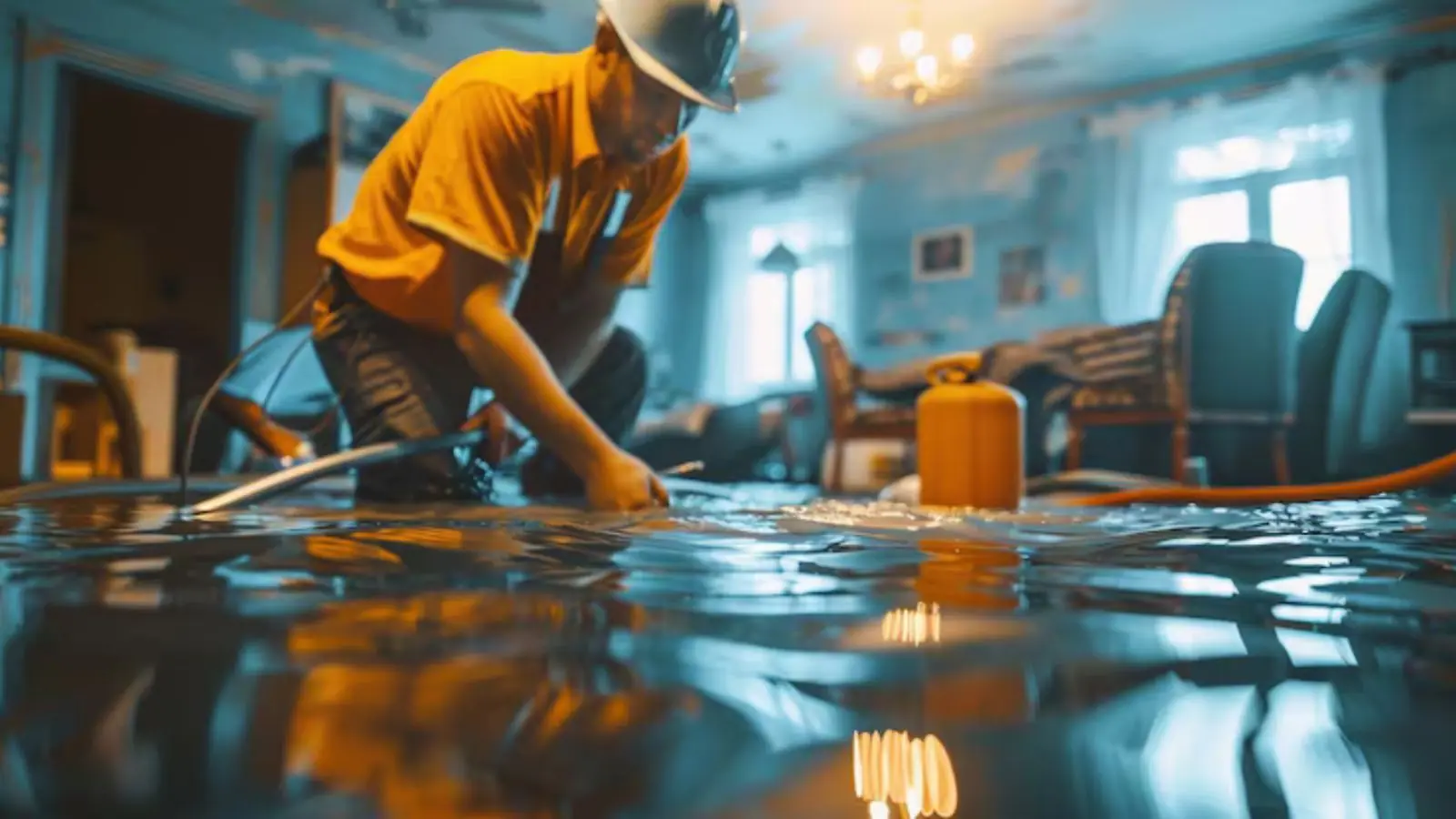
Active water or sewage in the house: what to do right now
If water or sewage is still in the house, this is an urgent cleanup, and our 24/7 dispatch line is (972) 945-2885. Same-day response is offered when available. Until a crew arrives, stop the source, close the main water valve if a supply line is involved, and lift valuables, shoes and electronics onto dry surfaces. Keep children and pets out of any water that could be contaminated.
Turn off power to the wet rooms only if the panel is dry and you can reach it without crossing water. Do not walk through standing water to find a switch. Photograph each room before anything is moved.
Electrical and sewage safety
If water is reaching outlets, the breaker panel or ceiling lights, or you smell gas, get out and call the utility or 911 before you call the restoration line.
Sewage carries bacteria. Avoid skin contact, skip the wet-vac, and let trained crews in protective gear remove it.
Cleanup begins where mitigation leaves off
Mitigation handles the water and the drying. Cleanup is the hands-on work of taking out what is ruined, cleaning what can be saved and treating surfaces so odor and bacteria do not linger. On many jobs the two overlap in the first two days, so ask how your crew sequences them. For drying and moisture readings, see our water mitigation page.
Mold can get started quickly in wet materials, so pulling soaked pad and debris early matters.
Need water damage cleanup in Little Elm?
Call the 24/7 line.
Tear-out decisions: cut out or dry in place
The choice depends on how porous the material is and how clean the water was. Clean water that hit solid wood or sealed tile can usually be dried in place. Gray or black water in carpet, pad or insulation usually means removal, because those materials hold contamination that cleaning cannot reach.
| Material | Clean water (Category 1) | Gray or black water (Category 2 or 3) |
|---|---|---|
| Carpet | Often dried and cleaned in place | Usually removed and discarded |
| Carpet pad | Often removed, since it dries slowly | Removed and discarded |
| Baseboard | Often removed and reset, or dried in place | Removed, cleaned or replaced |
| Drywall | Flood cut if sagging or soaked, otherwise dried | Cut out above the visible water line |
| Insulation | Batts often removed if saturated | Removed and discarded |
| Hardwood or laminate | Dry in place if the structure responds | Case by case, often removed |
A flood cut is a clean, level cut in the drywall, usually a foot or two above the highest wet mark. That line is chosen from moisture readings and, with Category 3 water, from the contamination line. Removing a clean strip is quicker to fix than cutting out a whole wall later.
Sanitizing and deodorizing: what is actually done
After debris is bagged and out, surfaces that stay are cleaned with detergent, because disinfectant does little on top of dirt. Then an antimicrobial treatment is applied to the framing, subfloor and any remaining surfaces. That product is a registered cleaner and not a cure-all, so it supports the removal work. It does not replace it.
Odor comes from damp porous material and from contaminated residue. The fix is removing the source, finishing drying and then using methods such as thermal fogging or hydroxyl units if odor persists. Spraying air freshener over wet carpet only covers the smell for a day or two.
HEPA air scrubbers pull fine dust and particles out of the air while tear-out is underway. They run behind containment barriers, which are plastic sheeting that keeps dust and contaminated debris from drifting into dry rooms. If your crew skips the barriers on a Category 3 job, ask why.
Contents: move, pack out, clean
Move in place
Furniture is lifted onto blocks or shifted to dry rooms so carpet and floors can be worked on.
Pack out
Items are inventoried, boxed and stored off-site when a room needs to be emptied for tear-out or drying.
Clean
Hard goods, dishes and some textiles can be wiped, laundered or ultrasonically cleaned if they are not contaminated.
Discard
Porous items soaked in sewage or flood water are usually not worth saving, and your insurer may want to see them first.
Keep a written list of damaged property, with photos. TDI advises keeping damaged items until the adjuster has seen them, so ask before anything leaves the house for the dumpster.
Category 1, 2 and 3: how handling changes
| Category | Typical source | How cleanup is handled |
|---|---|---|
| Category 1 | Supply line, broken faucet, water heater tank | Extract, remove saturated pad and soft materials, dry the rest in place |
| Category 2 | Dishwasher or washer discharge, sump overflow | Remove porous materials that stayed wet, clean and treat surfaces, then dry |
| Category 3 | Sewage backup, rising flood water | Full protective gear, containment, removal of porous materials, cleaning and antimicrobial treatment |
Clean water that sits for a few days can be reclassified, because bacteria multiply in warm, wet materials. This is part of why speed matters. When the source was a flood, see our flood damage restoration page for how rising water is treated, including why a separate flood policy matters.
What affects the cost of cleanup
Water category
Sewage or flood water needs protective gear, containment and removal of more materials than a clean supply line leak.
Square footage
The size of the affected area sets how much debris, pad and drywall must come out.
Materials
Carpet, hardwood, tile and drywall each have different tear-out and disposal needs.
Contents volume
More items to move, pack out or clean means more labor and storage.
Rebuild scope
What comes out now decides what must be rebuilt later, so the cleanup scope shapes the whole project.
Insurers draw a line between a sudden event and long-term seepage. TDI describes the first as commonly covered and the second as typically not, and says floods are a separate policy matter. Read your own policy, call your agent early, document every room, save receipts, and let the adjuster look before anything permanent is rebuilt.
Every home and loss is different, so a figure given before anyone sees the damage is a guess. Want your real number? Call (972) 945-2885.
What rapid growth means for Little Elm homes
Little Elm went from 3,646 residents in 2000 to 25,898 in 2010 and 46,453 in 2020, according to the Census. That means a large share of local housing is relatively new, built with modern drywall, engineered flooring, plastic supply lines and quick-build framing. Newer materials can be forgiving of clean water but still do not like sitting wet, so keep tear-out decisions tied to readings rather than the age of the house.
If your home is still young, ask whether any builder warranty still applies before work starts, and bring that question to your insurer as well. Supply line fittings, appliance hookups and water heaters are common leak points in newer homes. A plumber can inspect them once the area is dry. Neighbors in The Colony can reach the same line, and our water damage repair page covers rebuilding after tear-out.
Frequently Asked Questions
Do you handle water damage cleanup emergencies at night or on weekends in Little Elm?
Yes, and late-night calls are common for sewage backups and overflowing appliances. Tell the dispatcher what the water looks and smells like, and whether anything electrical is wet. That decides if a crew arrives with protective suits, containment sheeting and debris bags. Same-day response is offered when available.
Can my carpet be saved after a leak?
Sometimes. Carpet soaked with clean water that is extracted quickly can often be cleaned and dried in place, although the pad underneath usually comes out. Carpet that took in sewage or flood water is normally discarded.
The room smells musty after the water was cleaned up. What now?
A musty smell usually means damp material is still hiding somewhere, such as under baseboards, in a wall cavity or beneath flooring. Moisture readings find it. Deodorizing without drying only hides the problem for a while.
What does a HEPA air scrubber actually do?
It pulls air through a fine filter that traps dust and particles released during demolition. Combined with containment barriers, it keeps debris from spreading into rooms that stayed dry.
Why cut the drywall a foot or two above the water line?
Water wicks upward inside drywall beyond the stain you can see. Cutting above the wet line, based on moisture readings, removes the wet portion and leaves a straight edge to patch.