
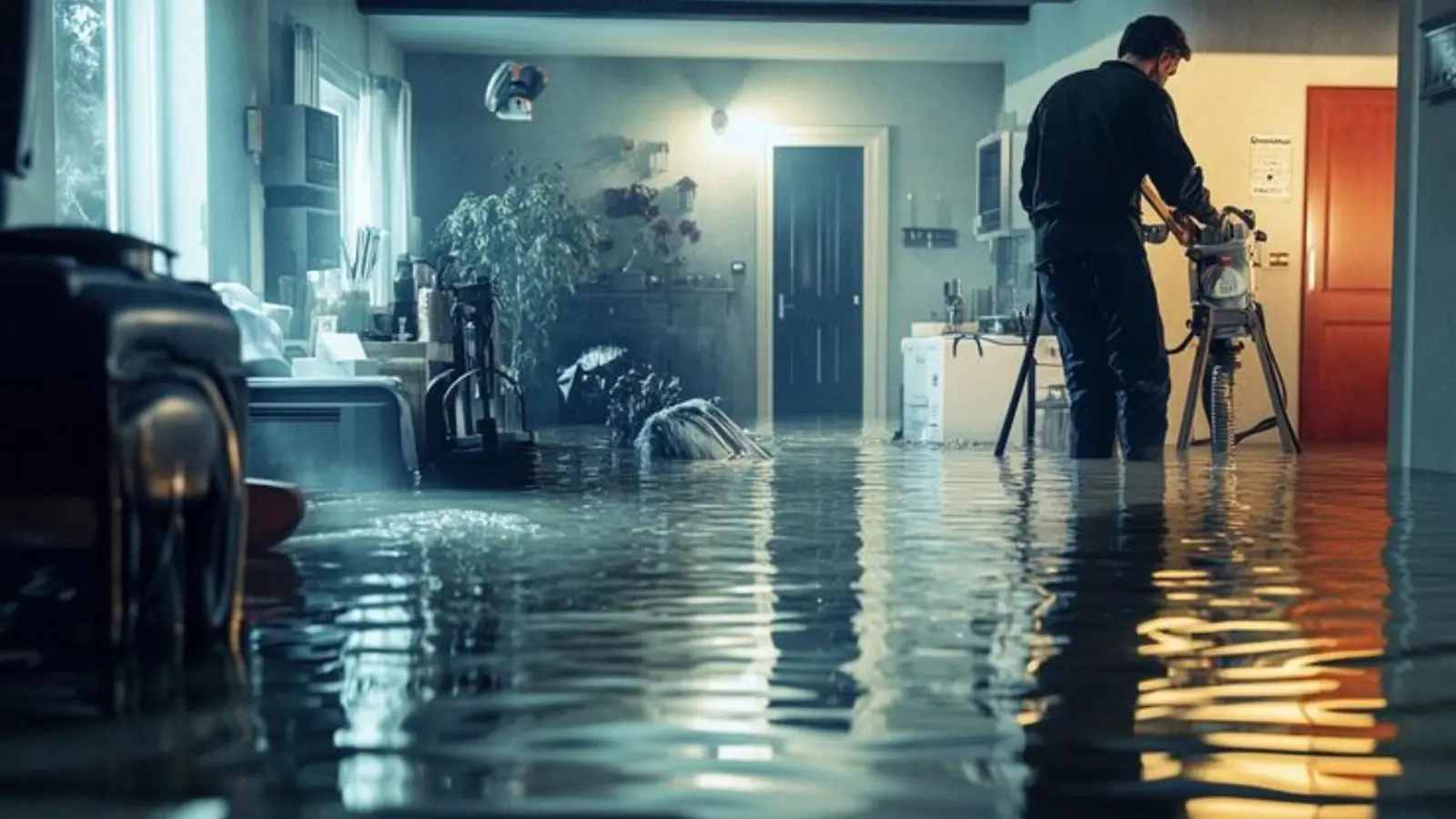
Why the order of operations matters
ANSI/IICRC S500 is the published industry standard for water damage restoration. It does not sell equipment or schedule crews. It describes a sequence: assess, classify, remove water, dry, clean, rebuild. Skipping a step, especially measurement, is how homes end up with damp walls and musty smells weeks later.
Ask any company whether its crews work to S500. A good answer describes the steps below in plain words and names the instruments they use to prove the structure is dry.
The steps in order, with your role at each one
- Emergency contact and dispatch. You describe the source, the rooms affected and any safety issues. The dispatcher arranges a crew.
- Inspection and moisture mapping. Technicians scan walls, floors and ceilings with moisture meters and thermal imaging cameras.
- Water category and class. The crew identifies where the water came from and how much moisture-holding material is wet.
- Water extraction. Pumps and extractors remove standing and absorbed water.
- Demolition of unsalvageable materials. Wet drywall, pad and insulation come out when drying them is not realistic.
- Drying and dehumidification. Air movers and LGR dehumidifiers are placed to pull moisture from the structure.
- Monitoring and drying logs. Daily readings show whether the structure is approaching a dry standard.
- Cleaning and sanitizing. Surfaces get cleaned, and antimicrobial treatment is used where the situation calls for it.
- Restoration and rebuild. Drywall, flooring, trim and paint are replaced and finished.
Your job throughout is to stay informed, move valuables, keep records and approve the scope. You do not need to understand every instrument, but you do need to see readings.
Dealing with a wet house?
Call the 24/7 line.
What each step should look like on site
| Step | What you should see | Red flag |
|---|---|---|
| Assessment | Meters pressed to walls and floors, a thermal scan, a written scope | Only a glance and a verbal guess |
| Classification | Water source named, category and class explained | No mention of where the water came from |
| Extraction | Pumps or extractors running until standing water is gone | Fans started while water still pools |
| Demolition | Targeted removal of wet pad, baseboard or drywall sections | Everything torn out without readings |
| Drying | Air movers aimed along walls and floors, dehumidifiers running with doors closed | A single fan, no dehumidifier |
| Monitoring | Return visits, readings noted on a log | No follow-up until the final day |
| Cleaning | Surfaces wiped or sprayed, debris bagged | Debris left in the room |
| Rebuild | Scope agreed in writing before work starts | Rebuild begins before drying is confirmed |
Inspection: measuring what the eye cannot see
Water travels. A wet kitchen floor can mean damp drywall behind the cabinets and wet insulation in the wall cavity. Moisture meters read dampness inside materials, and a thermal imaging camera shows cool, wet patches without cutting into anything.
The crew then builds a moisture map, a simple record of readings room by room. That map becomes your baseline. If it is not recorded on day one, nobody can say later how much drying was actually accomplished.
Category and class in plain language
Category describes how clean the source water was. Category 1 is clean, such as a broken supply line. Category 2 is gray water like dishwasher discharge. Category 3 is black water, including sewage and rising flood water, and it changes what can be saved.
Class describes how much wet material there is, from Class 1 with little wet material to Class 4 with deeply held moisture in dense materials like hardwood or plaster. A Class 2 job with a gray water source gets a different plan than a Class 1 job with clean water. Neither rating is a judgment of how bad your day is, just a way to size the equipment.
If you want the sourcing and removal side explained further, see our water mitigation service page.
Extraction, demolition and the drying phase
Extraction comes first because every gallon you pull out as liquid is a gallon you do not have to evaporate. After that, materials that cannot be dried in a realistic time, such as saturated pad or soaked insulation, are removed. This is called controlled demolition, and it should be limited to what the readings justify.
Drying then runs on a principle. Air movers push air across wet surfaces to release moisture. LGR dehumidifiers pull that moisture out of the air so it does not settle back into the structure. Both must run together in a closed space. Most drying jobs take several days, though the exact timeline depends on the materials and class.
Ask to see the equipment placement. Air movers should be directed at wet surfaces, not simply parked in the middle of the room.
Cleaning, sanitizing and the rebuild decision
After drying, the structure is cleaned and sanitized. Gray and black water jobs need more thorough cleaning, and antimicrobial treatment may be used where appropriate. If mold is found during demolition, work stops until it is addressed under a protocol, which is where mold remediation comes in.
Rebuild is the last step and often a separate scope. Drywall, flooring, trim and paint go back after readings confirm the dry standard. Our water damage repair page covers what a rebuild scope typically includes. A real price comes only after a crew has assessed your home, because materials, square footage and drying days all change the number.
Little Elm rebuild permits and who shuts off your water
The Town of Little Elm was incorporated in 1966 and has operated under home rule since 2001. For rebuild work beyond simple cosmetic repairs, ask the Town of Little Elm building department which permits and inspections apply before any contractor starts. Do not assume. Get the answer before the demolition scope is signed.
The Town also bills residents for water and solid waste. If your main valve fails or will not turn, call the Town to ask who can shut service at the meter, and do it before the leak floods another room. Save that number in your phone now.
Crews serving Little Elm also cover nearby communities such as Prosper to the west and Aubrey to the north, where process questions are the same but utility contacts differ.
Frequently Asked Questions
How long does the restoration process usually take?
Extraction and assessment can happen the same day. Drying usually runs for several days and depends on the water category, the class and the materials. Rebuild is scheduled afterward and varies with scope.
Should I start drying before the crew arrives?
You can lift valuables, open windows and remove loose items. Hold off on permanent fixes. State insurance guidance says to photograph the damage first and let the insurer see it before anything is rebuilt.
What is a drying log?
It is a record of moisture readings taken each visit, along with equipment placement. It shows whether the structure is trending toward the dry standard and gives you documentation for your insurer.
Do I always need demolition?
No. Clean water caught quickly may allow drywall and flooring to dry in place. Contaminated water or long exposure often makes removal the safer choice. Readings, not guesses, should decide.
Who do I call in Little Elm if my main valve will not shut?
The Town of Little Elm bills water and solid waste to residents, so start with the Town to ask about shutting service at the meter. Then call our 24/7 line to dispatch a crew while the water is being stopped.