
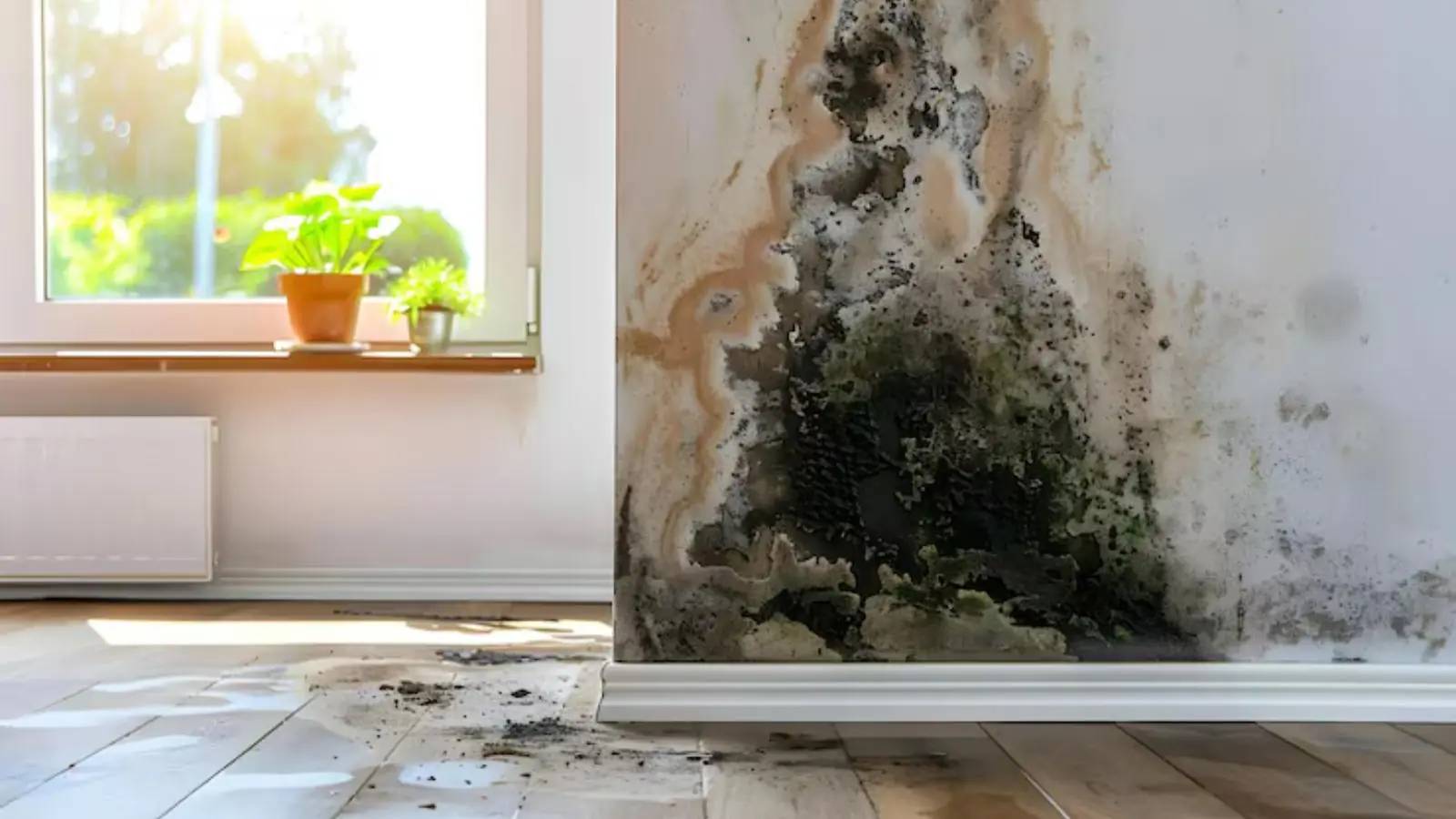
Why a leak and mold show up together
Mold is a moisture problem before it is anything else. Without a wet surface to feed on, it does not get started, which is why water damage and mold so often appear in the same room. The Texas Department of Insurance says mold can start growing within a day after a leak.
That one fact shapes everything else on this page. A slow drip behind a sink and a burst supply line both put water into building materials. The difference is how long the materials stay wet before anyone notices.
Fast, thorough drying is the main thing a homeowner can influence. Our water mitigation work exists for exactly this reason: remove the standing water, pull moisture out of the structure, and keep the wet period short.
The materials that stay wet longest
Not every surface dries at the same speed. A tile floor sheds water in an afternoon, while the layers hidden inside a wall can hold it for days. Moisture meters and thermal imaging cameras exist because the wet part of a house is often the part you cannot see.
Drywall paper
The paper facing on drywall soaks up water quickly and dries slowly. A wall can look fine on the surface while the back side stays damp.
Insulation
Fiberglass batts and blown-in insulation trap water inside the wall cavity. Wet insulation often has to be removed, not just dried.
Carpet pad
The foam pad under carpet acts like a sponge and sits against the slab. Pad that stays wet is usually replaced even when the carpet is saved.
Wood framing
Studs and bottom plates absorb water slowly and release it slowly. Framing is dried in place with air movers and dehumidifiers, then checked with a meter.
Dealing with mold after a leak?
Call the 24/7 line.
A rough timeline from wet to moldy
Every home and every leak is different, so treat this table as a framework, not a stopwatch. It shows why the first day matters and why "it dried on its own" is not always true of what is inside the wall.
| Time since the leak | What is happening | What to do |
|---|---|---|
| First day | Water spreads into drywall, pad and baseboards. Mold can begin to grow, per TDI. | Stop the source, remove standing water, call for drying help. |
| Days 2 and 3 | Surfaces look drier but cavities and pad stay damp without equipment. | Run air movers and LGR dehumidifiers. Confirm with a moisture meter. |
| Days 4 and 5 | Materials left wet may show staining, a musty smell or visible growth. | Have a professional check hidden areas before anything is closed up. |
| Past a week | Prolonged moisture can mean more materials need removal and cleaning. | Ask about a written plan that follows ANSI/IICRC S520. |
Signs to check after a leak
You do not need special tools for a first look. Walk the room slowly, use your nose as well as your eyes, and check the places water tends to hide.
- A musty smell that returns when the room is closed up, even with nothing visible.
- Paint that bubbles or peels, or drywall that feels soft near the floor.
- Baseboards that have swelled or pulled away from the wall.
- Stains that grow after the area looked dry, which often points to a source still active.
- Carpet that feels cool or damp when other flooring in the room feels dry.
None of these signs identifies a type of mold, and color alone cannot do it. They tell you moisture is present, which is the part you can act on right now.
Dry first, or test first?
Homeowners often ask whether they should order mold testing before anything else. If the water is still there, drying comes first. Testing a wet house tells you little that the moisture reading has not already said.
Testing and remediation follow ANSI/IICRC S520, and that standard calls for fixing the moisture problem as part of the job. Once the structure is dry and any suspect materials are addressed, an assessment can confirm what was found and what was done.
If visible growth covers a large area, the next step is a mold remediation professional, not a spray bottle. Before hiring, find out whether the contractor carries the state mold license, and keep health questions for your physician.
A seasonal checklist for Little Elm homes
Most hidden moisture in a home starts with a repeatable source. Roofs, windows, supply lines and condensate drains each have a season when they are most likely to fail. A quick routine catches them before a stain turns into a project.
- Spring: look in the attic and at ceiling corners for stains after heavy rain, and check window caulking.
- Summer: inspect the AC condensate line and drain pan, since a clogged line can drip into a ceiling or closet.
- Fall: clear gutters, test downspouts and check exterior door seals before the second rainy stretch.
- Winter: insulate exposed pipes and know where your main water shutoff valve is.
If you find damage from a past leak, take photos before anything is moved. For a sudden pipe or appliance failure, our water damage cleanup service handles the wet-material removal and drying.
What Little Elm's rainfall means for your home
The National Weather Service's Dallas/Fort Worth climate normals put annual precipitation at 37.01 inches. May is the wettest month at 4.78 inches. For a homeowner, that makes late April a good time to check the roof, window frames and attic for staining before the heaviest rain arrives.
Little Elm also sits on the shore of Lewisville Lake, a flood-control reservoir. If a lower level or garage sits near the water, look up your address on the FEMA flood map. Flood damage is normally outside a standard home policy, so a separate flood policy is a question for your agent.
After a wet spring storm, photograph any new stain and report it quickly. TDI notes that hidden water damage usually must be reported within days after you first see it. The same spring weather reaches neighboring towns, and homeowners in Frisco and Prosper face the same post-storm checks.
Frequently Asked Questions
How fast can mold grow after a leak?
Growth can begin quickly, sometimes in the first day. How far it spreads depends on how long materials stay wet and how much of the structure holds moisture.
Can I just dry the room with fans and a dehumidifier?
For a small, clean-water spill on hard flooring, often yes. When water has reached drywall, insulation or pad, moisture meters and thermal imaging help confirm that the inside of the wall is dry, not just the surface.
Does homeowners insurance cover mold from a leak?
A burst pipe or broken hose is the kind of sudden event policies tend to address, while a slow leak that went unnoticed for months often is not, along with the growth it caused. Cleanup and testing coverage can be a separate add-on, so ask your agent what yours includes.
If I see dark spots, is it dangerous?
Color does not identify what a mold is, and we cannot diagnose anything. Questions about symptoms or health belong with your physician, while the practical step is to find and fix the moisture.
Why does the Little Elm checklist start with spring?
The NWS Dallas/Fort Worth normals list May as the wettest month at 4.78 inches. That is the stretch when a worn roof edge or weak window seal is most likely to let water into a wall, so a spring check is the practical place to begin.