
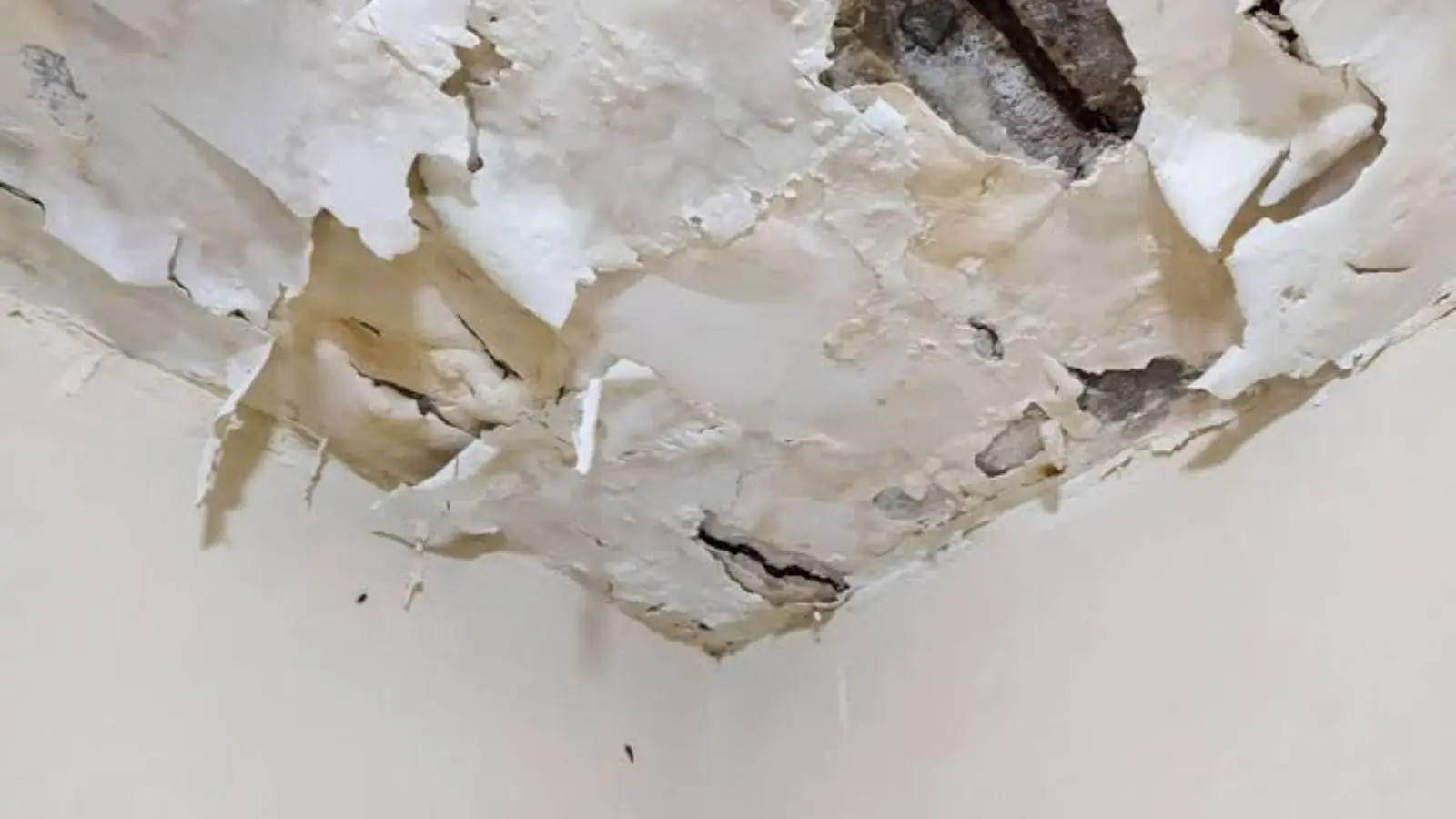
Fix the source before anyone prices the ceiling
A ceiling is the symptom. The cause sits above it: a roof leak, a plumbing line, a leaking AC condensate line or a failed seal around a vent. If the source is not fixed, the repair gets wet again, and any number you were given is wasted.
That is why a good scope begins with finding where the water came from. A moisture meter and a thermal imaging camera map the wet area across the ceiling, the walls below it and the attic or floor above. Plumbers and roofers handle the source, and restoration handles the water damage that source caused.
A real number comes only after the assessment. Anyone who quotes a total over the phone without seeing the ceiling is guessing.
Patch, section, or full sheet
A small stain that dried quickly may need only a patch. The drywall is cut out, a new piece is fitted, then taped, floated and sanded. Spot repairs depend on whether the surrounding drywall is still sound.
When water has soaked a larger area, the better plan is replacing the whole section or whole sheet. Sagging, bubbling and soft paper face mean the gypsum has lost strength. Ceiling sheets are heavy, so replacing one is slower than replacing a wall panel.
Some ceilings are not flat drywall at all. Acoustic tile, textured ceilings with popcorn or knockdown finishes, and ceilings with can lights each change the labor and the matching. Ask the contractor which approach they propose and why.
Dealing with a stained ceiling?
Call the 24/7 line.
The factors that set the scope
This table lists what shifts a ceiling repair and what to ask. It is also a useful checklist for comparing two written scopes.
| Factor | What changes in the scope | What to ask |
|---|---|---|
| Water category | Clean supply water is simpler, gray or black water means removal of porous materials | What category is this and how was it determined? |
| Affected area | More wet drywall, more sheets, more taping and finishing | Where does the wet zone end? |
| Insulation above | Wet insulation holds moisture and may need removal | Is the insulation being checked and replaced? |
| Texture and finish | Matching knockdown, orange peel or popcorn takes added skill | How will the texture be matched? |
| Ceiling height and access | Tall ceilings need scaffolding, attic access limits the work | Is staging needed and is it in the scope? |
| Mold suspected | Containment, HEPA filtration and a mold protocol may apply | Is a mold assessment recommended? |
| Drying time | More equipment days when materials are saturated | How many days of drying are expected? |
| Paint | A patch often needs the full ceiling repainted for an even finish | Is the whole ceiling or just the patch painted? |
Insulation, texture and paint are where surprise lines appear
Wet attic insulation is easy to overlook because it sits out of sight. Fiberglass batts and blown-in material both hold water, and they can keep a ceiling damp long after the surface looks fine. Ask whether the scope includes checking and replacing insulation over the affected area.
Texture matching takes the most skill on a finished ceiling. Knockdown, orange peel and skip trowel each have a pattern that shows if the patch is off. Ask to see a sample if it matters to you, and plan on painting the full ceiling plane, not just the repaired spot.
Ceiling height, access and containment
A standard flat ceiling in a bedroom is easy to reach. A vaulted ceiling in a living room needs scaffolding or tall ladders, extra labor and more careful dust control. Ceilings under a second-floor bathroom can mean opening a wall as well, so the scope reaches past the stain.
If mold is suspected, the work changes. Containment barriers, negative air with HEPA air scrubbers and a written protocol can apply, and mold remediation is its own scope. Texas keeps the mold assessor and the remediator as two different licensed parties, so ask any bidder about their state license.
Drying time and insurance
Drying is not a day or an afternoon. Air movers and LGR dehumidifiers often run for several days, and readings must show the materials are dry before anything closes up. Closing a damp ceiling is how the problem returns.
On insurance, an abrupt event like a burst pipe is more likely to be covered than long-term seepage. Check your policy and ask your insurer, and hold off on rebuilding until the insurer has seen the ceiling. A water damage repair scope written after drying is what your adjuster will compare against.
Little Elm homes are young, so ask about warranties first
Little Elm grew from 3,646 residents in 2000 to 25,898 in 2010 and 46,453 in 2020. That growth suggests a large share of local homes were built in the last 25 years. Builder-era roofs, flashing details and attic ventilation can fail early, and a ceiling stain is often the first sign.
Before you hire anyone for a ceiling, ask whether a builder warranty, a roof manufacturer's warranty or a service plan might apply. Pull your closing paperwork and note any dates. Photograph the stain, the attic side if it is safe to reach, and the roof area above, since warranty claims and insurance claims both depend on documentation.
A ceiling assessment should look at the source, the insulation and the drying plan together. Homeowners in nearby Frisco and Prosper have the same young-housing questions, and we reach both from our Little Elm base.
Frequently Asked Questions
Why can't a contractor give me a firm ceiling repair number over the phone?
Because the visible stain rarely shows the whole problem. Wet insulation, soft drywall and the source of the water change the work. A written scope after an assessment is where a real number comes from.
Can a stained ceiling just be painted over?
Painting over a stain that is still damp hides the problem and can trap moisture. If the source has stopped and the drywall is dry, firm and not sagging, a stain-blocking primer and paint may be enough. Have a moisture meter reading taken first.
Does insurance cover a water damaged ceiling?
A burst pipe or similar abrupt failure is often covered, while a drip that went on for months is the kind of loss policies tend to exclude. The roof or plumbing repair may be treated separately from the ceiling. Check your policy and ask your insurer.
How long does ceiling repair take after the leak is fixed?
Drying comes first and may take several days, followed by removal, drywall, taping, texture, primer and paint in stages. Each coat of compound needs time to dry. Ask the contractor for a day-by-day sequence.
Does a builder warranty matter on a Little Elm home with a ceiling leak?
It can. Much of Little Elm was built after 2000, so some roofs and attics may still be inside a builder or manufacturer warranty window. Read your closing documents and ask the builder before a repair that could affect a claim.