
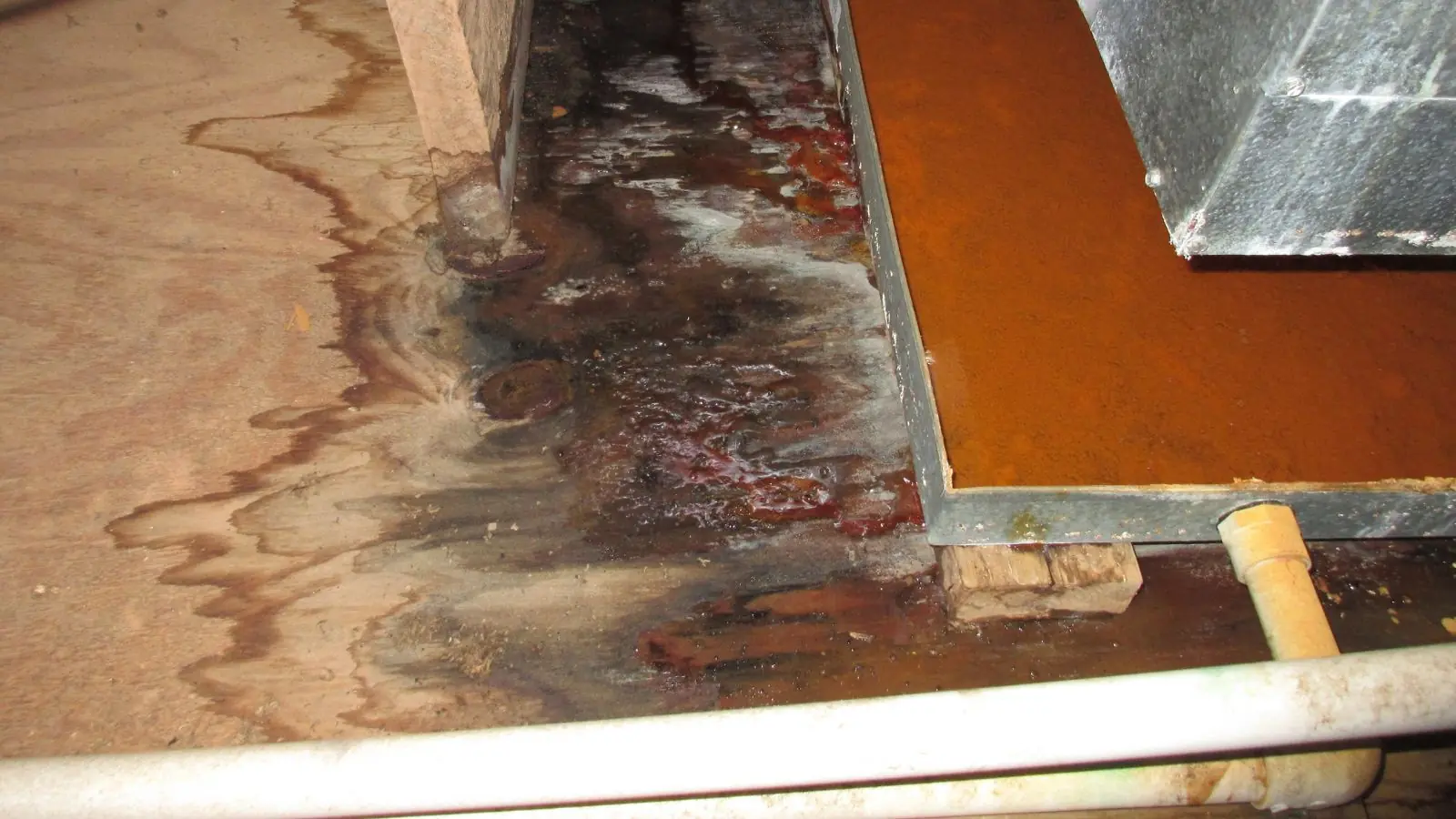
Start with the probe test
Press a screwdriver or an awl into the wood. Sound wood resists and the tool leaves a small mark. Rotted wood gives way, crumbles or comes out in long, stringy splinters. Test several spots, especially at joints, ends and the lowest few inches where water pools.
Staining alone does not mean rot. Dark water marks on surface wood are often just discoloration, and a moisture meter reading separates a damp board from a decayed one. Probe plus meter gives you the real picture.
Dry first, repair second
Wood holds moisture, and it moves as it dries. If you patch, fill, paint or close up a wall while the lumber is still wet, the finish fails and the trapped moisture feeds new decay. Wait until readings are back near a dry reference taken from similar wood elsewhere in your home.
Professional drying uses air movers and LGR dehumidifiers, with injectable drying for wall cavities that are closed. Our water mitigation service handles that stage so the repair has stable material to work with.
Dealing with soft or swollen wood?
Call the 24/7 line.
Framing, studs and joists
Structural framing that tests dry and sound can be kept. Wood that is surface-wet from a clean-water leak usually dries in place, and a crew will confirm it with a meter before the wall is closed.
When part of a stud or joist is soft, you have three options. Sistering means bolting or nailing a new piece alongside the sound original to share the load. Replacement swaps out the full member. Consolidation uses a hardener on lightly softened wood, which is a limited fix and not suitable where load matters. Anything that carries weight should be reviewed by a qualified builder or engineer.
Trim, cabinets and vanity bases
Baseboards and door casings sit right where floor water wicks. They are cheap to replace and usually cheaper than saving, since wet trim hides moisture against the wall. Pull them, dry the wall behind and install new.
Cabinet toe-kicks and vanity bases are often particleboard or MDF. Once those swell, they do not return to shape. Solid wood cabinet boxes may dry and be kept, but swollen composite parts usually need to be replaced. Check under sinks for slow leaks that started the problem.
Decks, fences and docks outdoors
Outdoor wood sees rain, sun and standing water on a loop. Look for soft spots near fasteners, posts with a punky base, boards that hold water on the top face and gaps where debris traps moisture. Probe the bottom of posts and the ends of boards.
Fence boards and rails fail where they touch soil or sprinkler spray. Posts tend to rot just at and below grade, so push on each one and see if it rocks. Decks fail around ledger boards, stair stringers and anywhere flashing is missing, and a ledger that has gone soft is a safety issue, not a cosmetic one.
Sealing helps only when the wood is dry first. Close damaged sections by replacing boards, adding airflow underneath and keeping soil and mulch away from the wood. A sealant over rot does not repair the rot.
Rot versus surface staining
Gray or black discoloration on a board can come from tannins, iron fasteners or old water lines, none of which weaken the wood. Rot is a structural change. The grain breaks across the fibers, the surface looks cubed or stringy, and the board feels light for its size.
If you are unsure, cut a small test notch in a hidden spot. Bright, firm wood below the stain means the damage is cosmetic and a stain-blocking primer or light sanding will handle it. Soft or crumbly wood means the board is spent, and you should look at the surrounding lumber too.
Moisture content gives the other half of the answer. Wood that probes sound but still reads wet needs more drying before anyone paints or closes it up. A crew can chart readings over several visits so you are not guessing.
Choosing between drying, sistering, patching and replacing
| Wood condition | Typical call | Notes |
|---|---|---|
| Surface wet, probe resists | Dry in place | Confirm with meter before closing walls |
| Stained, firm and dry | Clean and finish | Cosmetic only |
| Soft at one end of a stud | Sister or replace | Cut back to sound wood |
| Swollen particleboard or MDF | Replace | Does not recover |
| Soft deck board or post base | Replace | Check nearby members |
| Fuzzy growth or musty smell | Test and assess for mold | Follow ANSI/IICRC S520 steps |
| Trim wet from floor water | Remove and replace | Dry the wall behind it |
Check for mold before you close the wall
Growth can start within roughly a day of a leak. Before drywall goes back, inspect the back of the old sheet, the stud faces and the bottom plate. A musty smell or visible growth means pause.
Mold jobs follow ANSI/IICRC S520, and the state regulates assessors and remediators as separate roles. Before hiring, confirm the person holds the license Texas requires for that task. Our mold remediation page explains what a protocol involves.
Restoration does not fix a roof, a foundation or poor drainage. If the wood keeps getting wet, find that cause with the right trade.
What Little Elm's lakeside parks suggest you inspect
Little Elm has several lake-adjacent parks, including Cottonwood Park with its marina, Little Elm Park, and McCord Park with its fishing dock. They are good reminders that wood near water ages differently than wood inland. Take the cue for your own property: check dock boards and pilings, deck posts, fence bottoms and any wood that stays damp.
Make an inspection list in spring and fall. Probe the base of every post, look for cracked or cupped boards, and clear leaves from joints. May and October are the wettest months in the DFW normals, at 4.78 and 4.37 inches, so an inspection just before each is a practical rhythm.
For repairs that follow a leak or storm, Frisco and Prosper homeowners reach the same crews through one 24/7 line.
Frequently Asked Questions
How do I know if wood is rotted or just wet?
Probe with a screwdriver. Sound wood resists and rotted wood sinks in or crumbles. A moisture meter helps tell a damp board that can dry from one that has lost strength.
Can I sister a damaged joist myself?
Small, non-structural fixes are common DIY work, but joists and studs that carry load should be reviewed by a qualified builder or engineer before you sister them.
Does wood filler fix soft wood?
Filler can cosmetically restore a sound board with a small dent. It does not give strength to rotted material, so cut back to firm wood first.
Is mold inside a wall my insurance's problem?
Texas Department of Insurance guidance says mold on a covered damaged item is covered, but most policies exclude mold cleanup and testing after the item is removed unless you added coverage. Ask your agent.
What should I check on a Little Elm dock or deck after heavy rain?
Probe post bases and board ends, check fasteners for loosening and look for standing water on the surface. With May and October the wettest months in the DFW normals, those are good months to look.