
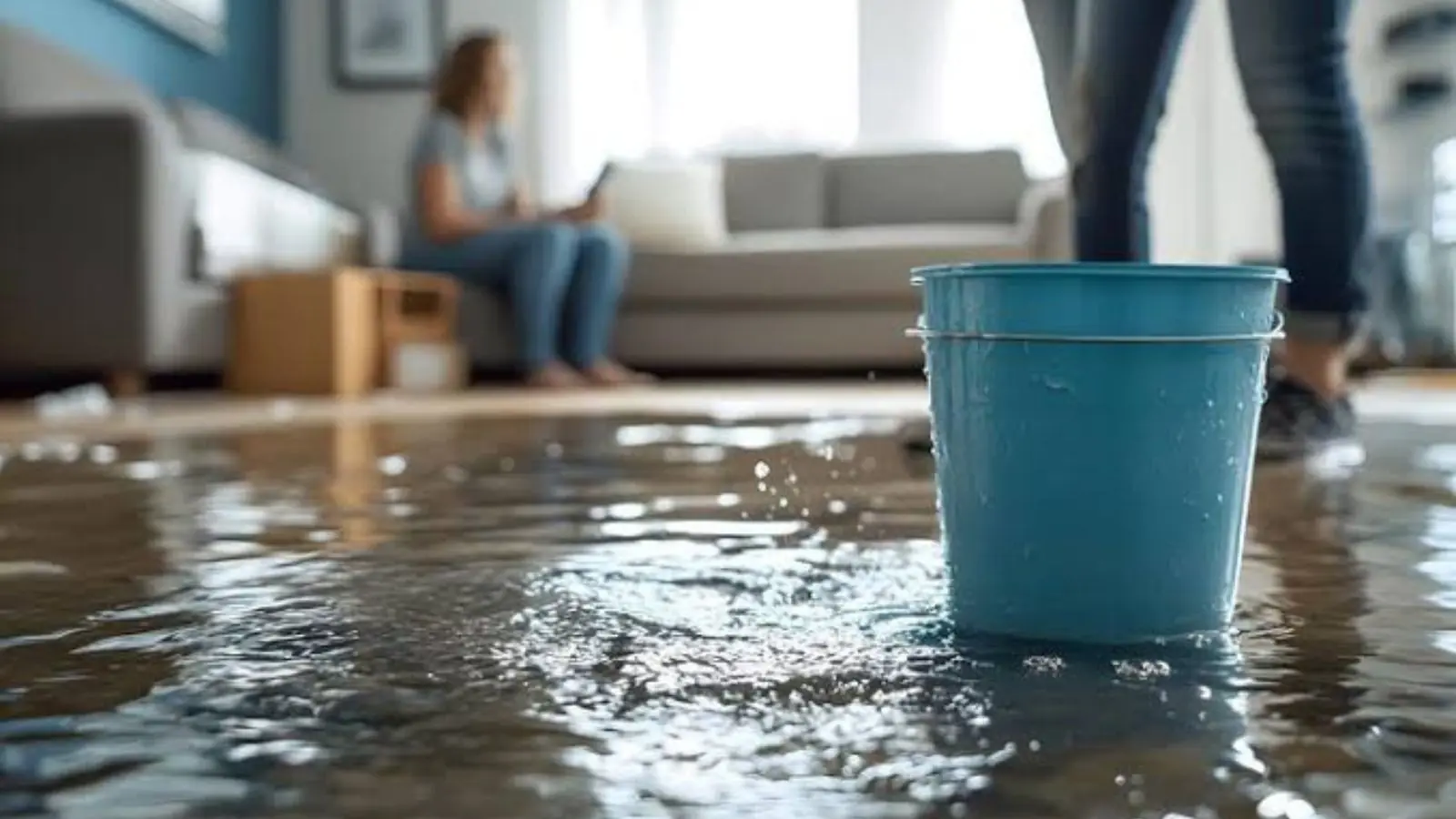
The call order in one list
Print this or screenshot it. Each step is explained below, but the sequence is the part people forget in the moment.
- Get safe: stay out of water near outlets, panels or appliances.
- Stop the water if you can reach the valve safely.
- Photograph and video everything before you move it.
- Notify the landlord or property manager in writing.
- Report the loss to your insurer as soon as possible.
- Call a mitigation company to extract water and start drying.
- Meet the adjuster, hand over your records and keep receipts.
Steps four through six often overlap in real life. If water is still spreading, do not wait on a callback before you dry things out.
Steps 1 to 3: safety, the source and the first photos
If water touches outlets, a panel or anything plugged in, stay back and call the utility or 911 for any electrical or gas risk before anyone else. Cut power to wet areas only if you can reach the panel while standing dry. Keep children and pets out of any water that may be contaminated.
Find the shutoff valve under the sink, behind the toilet or at the washer box, and close it. In a rental, the main shutoff may be outside your unit, which is one more reason to message the landlord early. If you cannot stop it, say so plainly in that message.
Then take wide photos of each wet room, close photos of the source and short videos of water moving. Note the time. Texas regulators suggest a photo or video record plus a written list of what was harmed, and they want the wrecked items kept on hand for the adjuster's visit.
Dealing with a renters claim?
Call the 24/7 line.
Steps 4 to 6: landlord, insurer and drying crew
Send the landlord a written notice by email or the tenant portal, with photos attached. Say what you found, when you found it and what you did to limit damage. A text thread also counts as a record, but an email is easier to attach to a claim.
Call the claims line on your insurance card or app. Give the date, the likely cause and which rooms are wet. Ask for your claim number, the adjuster's contact details and what the insurer wants from you next.
Reasonable steps to stop further damage are expected of you, so do not wait on the adjuster before you move belongings and soak up standing water. A crew offering emergency water removal can extract standing water and start drying while paperwork catches up. Rebuilding can wait for the insurer's look, so keep this stage to drying and protection.
When the water comes from the unit above
A stain spreading across your ceiling usually means a leak upstairs, such as a supply line, an overflowing tub or an AC condensate line. Knock on the neighbor's door only if it feels safe, and tell the property manager either way. The manager can reach the source and shut off the water to the stack.
Your renters policy commonly covers your own belongings when the cause is sudden and accidental, no matter who owns the leak. Tell your insurer the water came from another unit, since they may seek payment from the responsible party. Do not agree to pay for anything in writing with the neighbor before you talk to your insurer.
Do not poke a bulging ceiling unless you must. Water trapped in drywall can release all at once, so put a bucket under the lowest point and keep people out of the room. Ask the property manager to arrange a controlled opening, and keep photos of the bulge before and after.
What the adjuster looks at
An adjuster wants to know the cause, the date, how quickly it was reported, and what was damaged. Expect questions about when you first noticed water and what you did next. They may photograph the same rooms you did and compare.
They will also look at your property list. Give them an inventory with item names, approximate purchase dates and any receipts or serial numbers. Have the soaked items available so the adjuster can see them in person.
If the source was a slow leak, the adjuster may ask about earlier stains or smells. Be accurate and specific. Check your policy and ask your insurer how it treats gradual damage, because that is where many disputes begin.
Where restoration paperwork fits
A restoration company works from the owner's permission for anything touching the structure. For a tenant, that means the landlord or manager authorizes the work or the owner's insurer arranges it. Your own insurer may want the company's records for your belongings.
The records matter: moisture readings from moisture meters, thermal imaging photos, equipment logs for air movers and dehumidifiers, and a daily drying record. These show what was wet, when it dried and what was removed. A water damage cleanup scope that lists affected materials helps the adjuster and the owner agree on repairs.
A restoration company does not approve claims or promise payment. It documents the work to a published standard, ANSI/IICRC S500, and your insurer decides coverage. Ask for copies of everything and keep them with your claim number.
A Little Elm freeze: why renters should have a burst-pipe plan
DFW averages 29.2 days a year with a low at or below 32 F, and the February 2021 freeze took the airport reading down to -2 F on Feb. 16, 2021. A freeze like that can split a supply line in an exterior wall or a water heater closet. If you rent in Little Elm, find your shutoff location this week and tell your household where it is.
On freezing nights, open cabinet doors under sinks on exterior walls and let a faucet drip, as long as your lease and local guidance allow it. Ask your property manager whether a heat-tape or insulation plan exists for exposed pipes.
If a pipe does burst, shut off the water, take photos before cleanup, and start the call order above. Renters across the lake in The Colony and south in Frisco face the same freeze risk, and the same sequence applies there.
Frequently Asked Questions
Who do I call first after a leak in my rental, the landlord or my insurer?
Make safety and the water source your first priority, then notify the landlord in writing and your insurer soon after. The two calls can happen the same day. Do not delay drying while you wait for either one.
Can I hire a restoration company myself in a rental?
You can call one to extract standing water and protect your belongings. Work on the structure itself needs the owner's authorization. Tell your landlord which company you called.
What if my landlord does not respond about the leak?
Keep sending dated written notices with photos, and keep taking your own photos as conditions change. Tell your insurer about the lack of response. Your lease and Texas law shape your options, so consider asking a tenant resource or attorney about repair rights.
How long do I have to file a renters water damage claim?
Report as soon as possible. For damage you did not see right away, the usual expectation is a matter of days from the moment you notice it, and your policy may set its own deadlines. Check your policy and ask your insurer.
Does a February 2021 style freeze change how I file after a burst pipe?
The steps are the same, but after a widespread freeze, crews and plumbers are in short supply. Report to your insurer and landlord early, document the burst pipe, and keep a record of every call so your place in line is clear.