
Why the choice matters
Mold work done badly can spread the problem, miss the moisture source or leave you with nothing in writing. Done well, it follows a plan, protects the rest of the house and ends with proof that the work was finished.
Little Elm grew from 25,898 residents in 2010 to 46,453 in 2020, and that growth brings plenty of companies advertising in town. A flyer or a search ad tells you very little. What tells you more is whether a company can answer specific questions in writing.
Start with the Texas license
Texas licenses mold assessment consultants and technicians and mold remediation contractors through TDLR, and registers remediation workers. Do not accept a verbal assurance. Ask the company to show you its Texas mold license, and look it up with TDLR yourself.
One rule surprises people. The person who assesses a project cannot also be the one paid to remediate it. That separation keeps the person who decides what needs doing independent from the person who is paid to do it.
Dealing with choosing a mold company?
Call the 24/7 line.
Questions to ask, and what a good answer sounds like
| Question | A good answer | A warning sign |
|---|---|---|
| Can I see your Texas mold license? | Yes, and they offer to show it. | Vague answers or "we do not need one". |
| Is there a written protocol? | A licensed assessor writes it and the remediator follows it. | No document, only a verbal plan. |
| How will you contain the area? | Containment barriers, negative air and HEPA air scrubbers. | Open doors and a box fan. |
| What is the scope in writing? | Rooms, materials, steps and the plan for drying. | A single line with a total and no detail. |
| How is the leak source handled? | A stated plan or a referral to the right trade. | Silence about where the water came from. |
| What happens at the end? | Clearance, then a Certificate of Mold Damage Remediation. | "You will know it worked." |
| Can you provide proof of insurance? | Yes, documentation on request. | Reluctance to share it. |
Notice that the table asks about process, not price. A real number comes only after a scope is assessed, so be careful of anyone who quotes sight unseen.
Red flags
Most bad jobs show warning signs early. Treat any of these as a reason to pause and compare.
- Pressure to sign on the spot or a discount that expires today.
- No written protocol, or a protocol that does not name the area and the materials.
- No stated plan for the moisture source, since mold needs moisture to return.
- A promise that mold will never come back. No honest company can make it.
- A company that offers to both assess and clean up one job, which Texas does not allow.
- Health claims or diagnoses. Those belong to your physician.
How the job should run once you hire
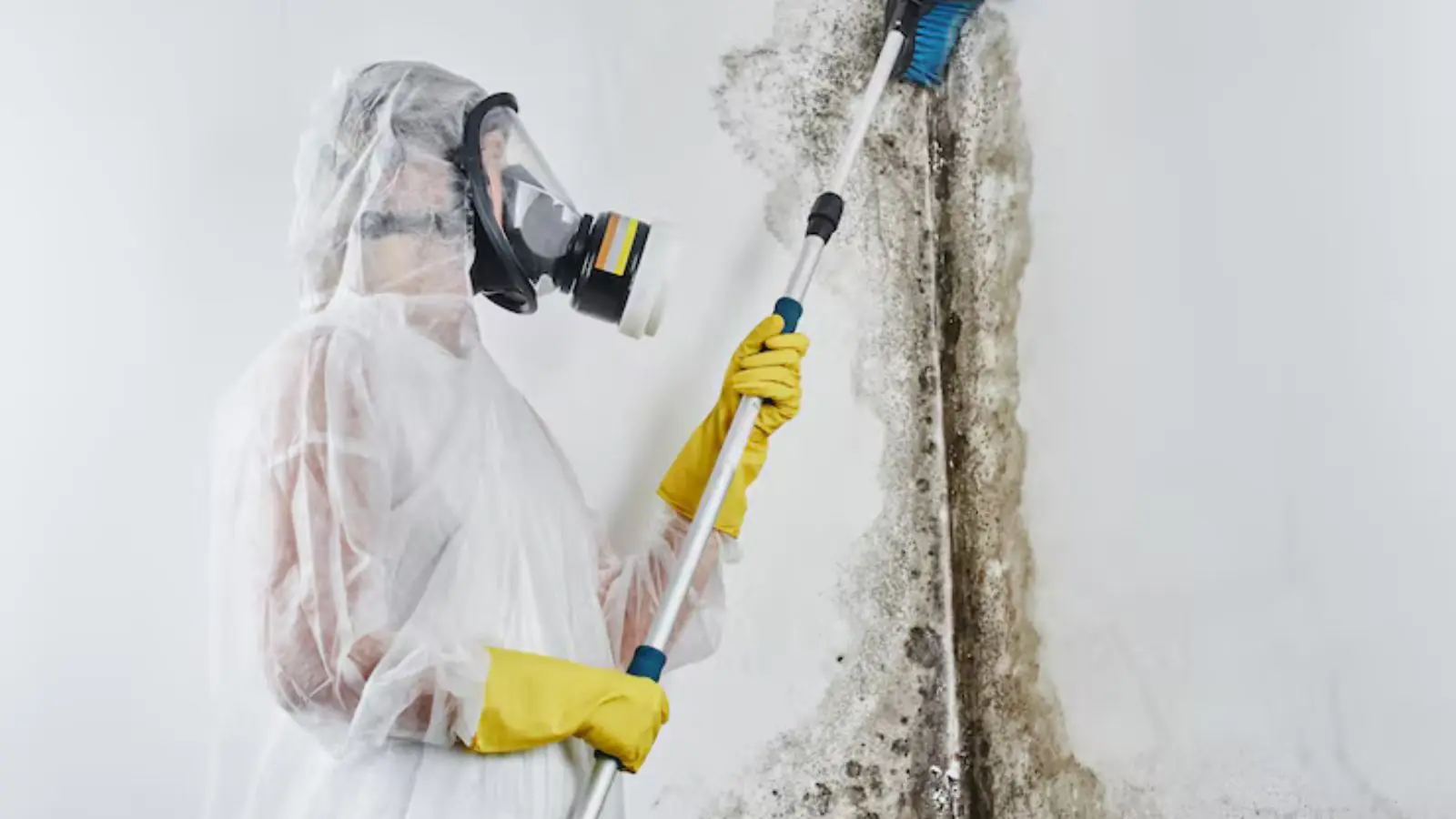
On a properly run job, the work area is sealed with containment barriers before anything is disturbed. Air scrubbers with HEPA filtration run during the work, and affected porous materials are bagged and removed rather than dragged through the house.
Hard surfaces are cleaned, the area is dried and the moisture is checked with a meter. If you see crews working without containment, or hear that the moisture will "sort itself out," call the company and ask them to explain. You are allowed to pause a job to get answers.
Standards, clearance and paperwork
Ask whether the crews work to ANSI/IICRC S520, the published mold remediation standard. It covers assessment, containment and verification that the work met its goals.
At the end, expect a clearance check and a Certificate of Mold Damage Remediation from the licensed remediator. TDI advises that for a claim, you should use a state-licensed mold professional and expect an inspection confirming removal and that the cause was fixed. Keep every document, since a buyer or a lender may ask for them later.
Get the scope in writing before work starts
A written scope should name each room, the materials to be removed, the containment method, the drying plan and how the job ends. It should also say what happens if hidden damage turns up once a wall is opened. Vague scopes lead to disputes later.
Cost depends on factors such as the square footage affected, the materials involved, how many drying days are needed, the equipment used and the rebuild that follows. A real number comes after the scope is assessed, and anyone who gives one sight unseen is guessing. Check your policy, since coverage for mold cleanup varies.
Where water cleanup fits
If the mold came from a recent leak, the water needs to come out first. Water damage cleanup removes wet materials and dries the structure, and a licensed mold remediation professional handles the growth itself.
Many people call us wondering whether we are the mold company. Here is the honest answer: this brand is a dispatch service that sends licensed and insured restoration professionals, 24/7, and we do not claim specific credentials on their behalf. Ask whoever is dispatched the same questions in the table above.
Hiring in a growing town like Little Elm
Little Elm reported 46,453 residents in the 2020 Census, up from 3,646 in 2000. More homes mean more advertising, so use that growth as a reason to be a little skeptical of the first name you see. Confirm the license, ask for a local contact and ask for the scope in writing.
This site is a 24/7 dispatch service, not a mold lab. We send licensed and insured restoration professionals and we never claim a specific credential for them. Ask the dispatched company the same questions, and compare answers if you have time.
The same vetting questions apply if you are helping family in Frisco or Prosper, where many of the same companies advertise.
Frequently Asked Questions
Can the company that tests also do the removal?
Not on the same project. Texas keeps the two roles apart, so ask any company how it handles that.
What is a Certificate of Mold Damage Remediation?
It is a document issued by a licensed remediator after the work is complete. It confirms the remediation was done, and it is worth keeping with your home records.
Should I get more than one opinion?
Yes, especially if the scopes differ. Compare what is written, not just what is said, and see whether each one deals with the source of the moisture.
Does insurance cover mold removal?
Coverage varies a lot by policy and by how the water arrived. Ask your agent what yours says before work begins, and keep the clearance paperwork.
How do I know a Little Elm company is real?
With Little Elm growing to 46,453 residents in 2020, many companies advertise here. Check that the company is licensed for the work, gives you a real local contact and puts the scope in writing.