
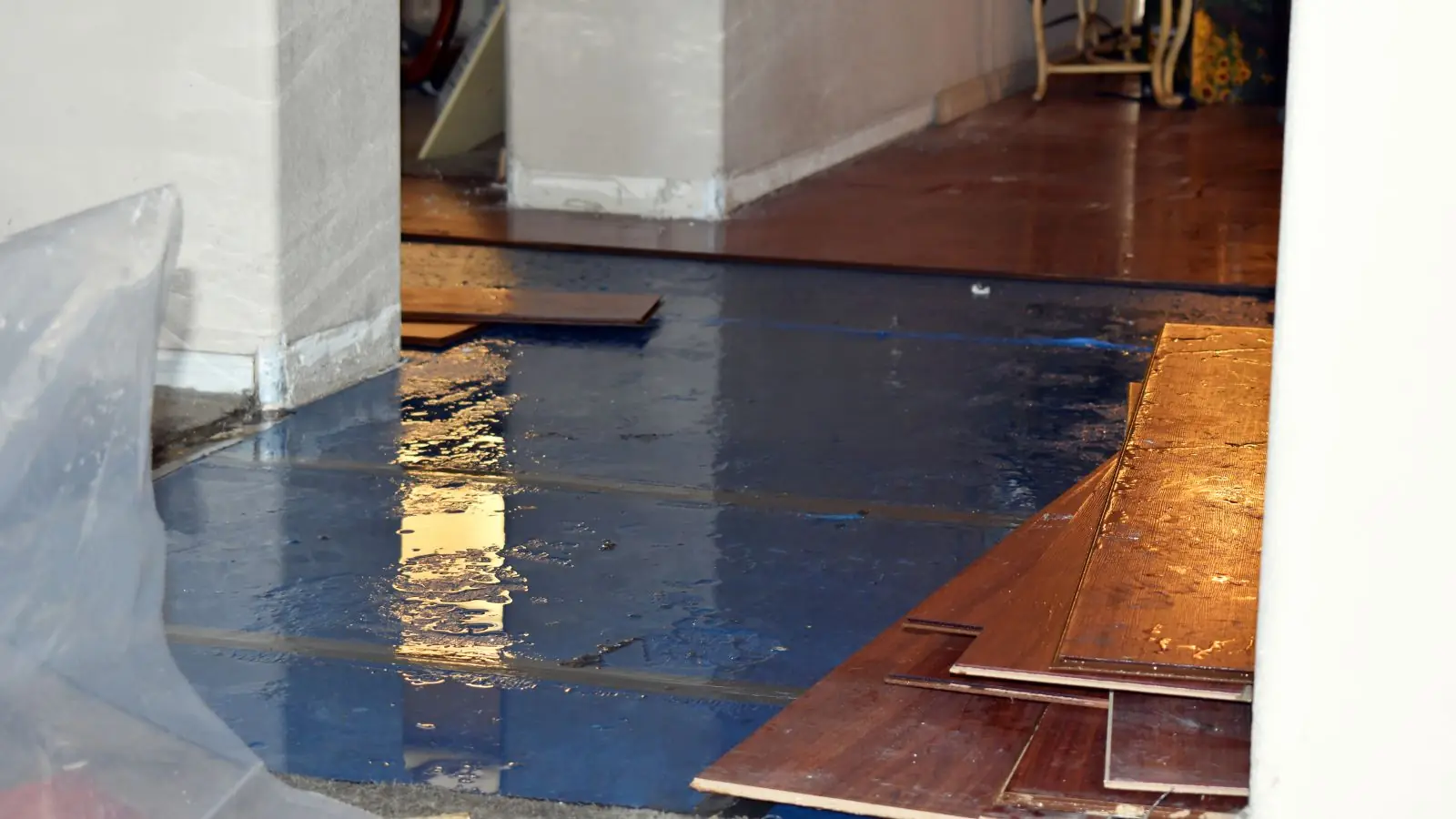
Cupping, crowning and buckling are not the same problem
Cupping means the edges of each board rise higher than the center, so the floor looks like a row of shallow troughs. It usually happens when moisture hits the underside of the board. Crowning is the reverse, with the center higher than the edges, and often shows up after a cupped floor was sanded before it finished drying.
Buckling is the serious one. Boards lift off the subfloor, sometimes several inches, because the wood has swelled so much it pushes against itself or loses its bond. Buckling usually means the boards need to be removed, though a professional should confirm.
Why the floor went wet in the first place
Finding the source matters as much as the repair. A floor that is fixed but still fed by a leak will fail again. These are the usual suspects in North Texas homes:
- A washer supply valve or hose that burst or slowly dripped.
- A dishwasher line or door seal leak under cabinets.
- An HVAC condensate line that clogged and overflowed.
- A plumbing leak inside a wall or under the slab.
- Slab moisture rising through concrete under a glue-down floor.
- A broken water heater or a refrigerator ice-maker line.
Under typical Texas policies, a sudden and accidental burst is often covered while a slow drip over months often is not. That makes the timeline of the leak matter, so note when you first saw the damage and report it quickly.
Dealing with cupped hardwood?
Call the 24/7 line.
Can the boards dry in place?
Sometimes. Speed is the biggest factor. Boards that were wet from clean water and caught within a few days have a much better chance than boards that sat wet for a week. Another factor is the subfloor. If the plywood or slab underneath is still wet, the boards above it will not stay flat.
Professionals use a pin or pinless moisture meter on the boards and compare readings with an unaffected area of the same floor. The goal is a dry standard drawn from your own house, not a number from a chart. Drying mats, which pull moisture through the board surface with suction, can help on small areas, while injected-air systems can dry beneath boards on larger areas.
Our water damage repair service covers the replacement side when drying alone is not enough.
Symptom, likely cause and next step
| Symptom | Likely cause | What to do |
|---|---|---|
| Edges slightly raised, floor feels damp | Moisture from below or a recent spill | Find the source, stop it, call for moisture readings |
| Pronounced cupping along one wall | Leak in wall, dishwasher or condensate line | Check behind appliances, document, schedule drying |
| Center of boards higher than edges | Sanded before fully dry | Let the floor stabilize and have it measured before refinishing |
| Boards lifting off subfloor | Long exposure or large volume of water | Expect replacement of the affected section |
| Black staining between boards | Prolonged moisture, possible mold | Stop, inspect the subfloor and consider a mold assessment |
| Gaps after drying | Normal shrinkage after swelling | Wait for stable readings before deciding on refinishing |
| Cupping across an entire slab-on-grade room | Moisture vapor from the slab | Test the slab and address moisture before any new floor |
Why you wait before sanding
A cupped floor can look worse than it is, and homeowners often want it flattened immediately. Sanding wet wood removes material from the high edges, and when the board finishes drying, it shrinks and the center sits higher. That is how crowning is created.
Let the boards dry fully. Check them with a moisture meter over several visits. Many cupped floors relax noticeably as they dry, and some need no sanding at all. Others will need a light sand and refinish, which should happen only when readings are stable and match the dry reference.
Solid versus engineered boards
Solid hardwood is cut from a single piece and can be sanded several times. It absorbs more water and takes longer to dry, but it can often be recovered. Engineered flooring has a plywood core and a thin hardwood veneer, so it is more stable under normal humidity but has less wear layer to sand.
When engineered floors get truly wet, the core layers can delaminate and the veneer can swell or peel. Those boards usually must be replaced. Floating engineered floors and glue-down floors also behave differently, so a professional should examine yours before you assume anything.
When replacement is the right call
Replace boards when they have buckled, delaminated, stained black or stayed distorted after reaching a normal moisture reading. Replace them also if the subfloor underneath is soft or has mold growth.
A good repair replaces the damaged section and blends new boards into the old, instead of tearing out the entire floor. If water came from a source that also soaked walls or ceilings, our water damage cleanup page explains how those areas are handled together. A price only makes sense after a crew measures the area and checks the subfloor.
The February 2021 freeze and your main shutoff
DFW dropped to -2 F on Feb. 16, 2021, during the February 2021 winter storm. Homes across North Texas, including Little Elm, learned how fast a burst line can turn into a soaked hardwood floor. On average the DFW area sees 29.2 days a year with a low at or below 32 F, so a freeze is not rare, only the severity was.
Before next winter, find your main water shutoff and test that it turns. Mark it with a tag. If a line bursts, shutting the main stops the damage while you wait for help, and floors that are only damp for a few hours are far more likely to recover than floors wet for days.
If your home is closer to the northern edge of the metro, our crews also dispatch to Aubrey and Frisco, where winter calls look much the same.
Frequently Asked Questions
How long does a cupped floor take to flatten?
It depends on the species, the subfloor and how wet it got. Many floors relax over days to weeks as moisture leaves the board. Do not judge the result until readings are stable.
Can I put a fan on my wet hardwood?
A fan helps move air, but it will not pull moisture from under the boards or the subfloor. Professional drying uses air movers, dehumidifiers and sometimes drying mats, along with meter readings.
Is a plugged HVAC condensate line covered?
A sudden overflow is often treated differently from a slow, ongoing drip, which many policies exclude. Coverage depends on your policy and how long the leak ran, so ask your insurer.
Do I need to remove baseboards?
Often yes. Removing or drilling baseboards lets crews dry wall cavities where water has wicked, and it prevents trapped moisture behind the trim.
How does the February 2021 freeze change what I should do now?
It shows why a labeled, tested main shutoff matters. DFW hit -2 F on Feb. 16, 2021, and burst lines then soaked floors. Locate the valve, test it, and keep a crew number ready.