
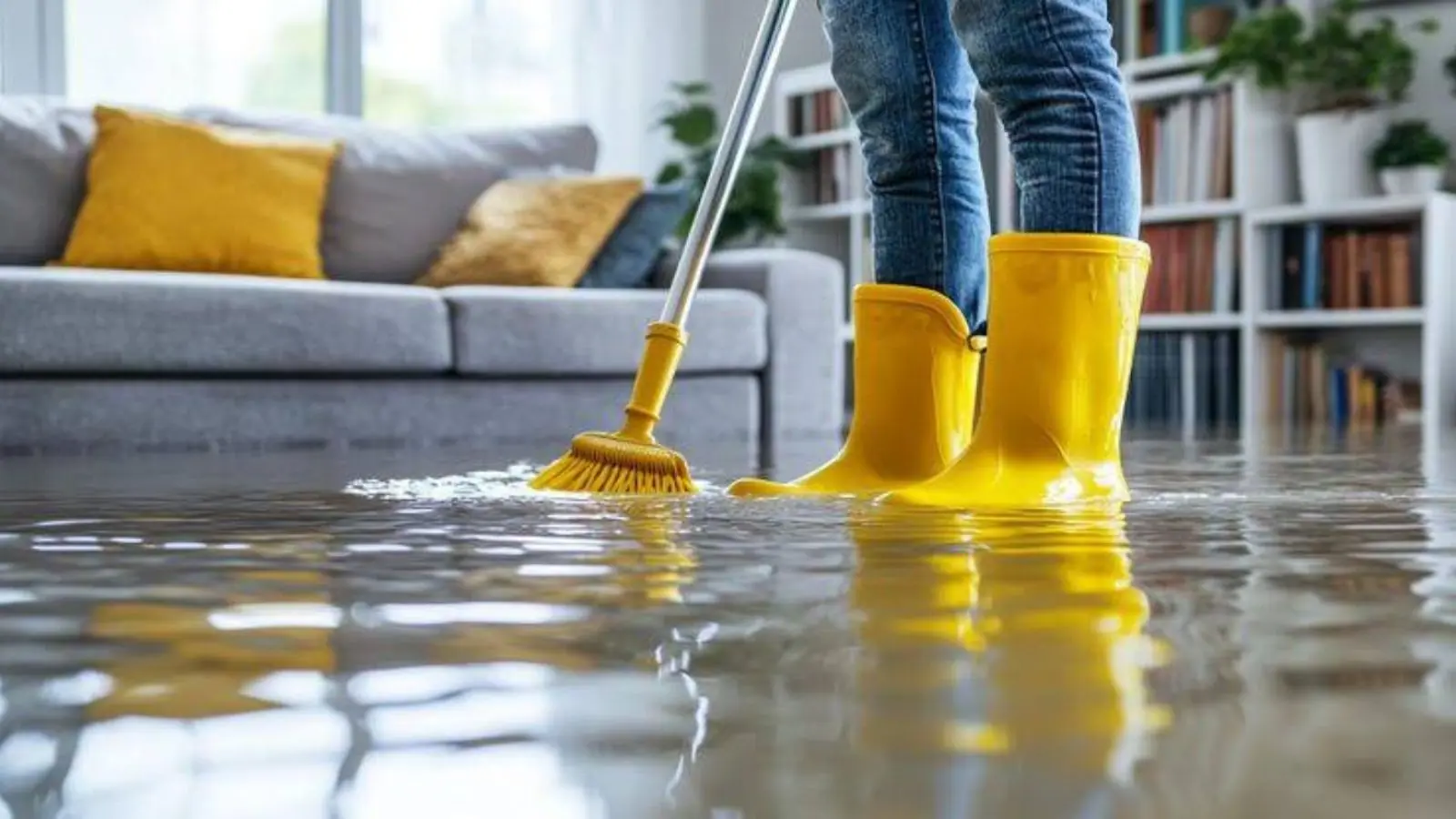
Safety comes before any bucket or mop
Walk in only after you know the electricity is handled. Water touching outlets, a panel, a garage door opener or a sump pump cord can energize standing water. If the panel sits in a wet area or you cannot reach it dry, stay out and call your electric provider or 911 first.
Once power is confirmed off in the wet zone, suit up. Rubber boots, waterproof gloves, safety glasses and an N95 or better respirator are the basics. Long sleeves help, and so does keeping children and pets in a dry part of the house until the area is cleaned.
Why flood water is treated as black water
The ANSI/IICRC S500 standard sorts water into three categories. Category 1 comes from a clean source such as a supply line. Category 2 is gray water, like dishwasher or washer discharge. Category 3 is black water, and rising flood water from outside, a creek or a lake belongs there.
Flood water crosses yards, streets and sometimes failed sewer lines before it reaches your floor. It can carry soil, fuel, fertilizer and bacteria. Treat anything it touched as contaminated until it has been cleaned and sanitized or removed.
That classification also changes the plan. Porous materials that sat in Category 3 water are usually removed instead of dried. A pro crew explains this on site, and the broader approach is covered on our flood damage restoration page.
Dealing with flood water in the house?
Call the 24/7 line.
A 48-hour working order
- Switch off power to the wet area from the panel, but only when the floor around it is dry. If it is not, wait for the utility to disconnect service.
- Stop the source if it is inside the house. For outside flooding, this means getting people and valuables up and out of the water.
- Photograph and film every room before touching anything.
- Lift small furniture, rugs and electronics onto dry surfaces. Pull cushions and bedding out of the house.
- Begin removing standing water, slowly if it fills a basement or lower level.
- Open windows if weather allows and run box fans out a window to move air, then bring in professional dehumidification as soon as it is available.
- Sort belongings into keep, clean and discard piles, using the table below.
- Call your insurer and report the loss. Ask what your policy requires before permanent repairs.
Growth can begin about a day after water arrives, per state insurance guidance, so the clock keeps running even after the water is gone. If surfaces stay wet into day three, a mold remediation assessment may become part of the job.
Keep or toss after flood water
The split is simple in principle. Hard, non-porous items can usually be washed and disinfected. Porous items soak up contaminated water and are very hard to make safe again.
| Item | Usual call after flood water | Why |
|---|---|---|
| Carpet and carpet pad | Discard | Fibers and foam hold contaminated water and cannot be sanitized in place |
| Drywall touched by flood water | Cut out and discard | Paper facing and gypsum wick water upward and stay damp |
| Batt insulation | Discard | Holds water and contaminants against framing |
| Mattresses and upholstered furniture | Discard | Deep padding cannot be cleaned through |
| Solid wood furniture | Often cleaned and dried | Dense material, but check joints and finishes |
| Glass, metal, hard plastic | Wash and disinfect | Non-porous surfaces release contaminants |
| Photos and papers | Freeze or dry quickly | Time-sensitive, a conservator can help for valuable items |
| Appliances and electronics | Do not power on | Have them inspected before use |
Photograph first, haul second
State insurance guidance asks you to record the damage on photo or video before cleanup and to hold on to ruined items for the adjuster. Start with wide shots of each room, then close shots of the waterline on walls and the condition of floors and belongings.
Keep receipts for hotel stays, fans, gloves and any emergency service. If you must discard a ruined carpet pad for safety, photograph it first and save a small cut sample.
Rising water from outside is generally excluded from a standard homeowners policy, which is why people buy separate flood coverage. Water that comes from a failed pipe or appliance inside the home is judged differently. Ask your insurer which category your loss falls into, and hold off on permanent repairs until an adjuster has looked at the damage.
Pumping out a flooded lower level without causing a second problem
It is tempting to drain a flooded basement in one afternoon. Do not. When the ground outside is still saturated, soil pushes inward on foundation walls, and emptying the space too fast can crack walls or lift a slab.
A common safe approach is to remove roughly a third of the water, mark the level, wait and check, then continue only when outside conditions allow. Your crew will judge the pace based on the site. The same logic applies to submersible pumps and wet vacs, so keep the pump discharge well away from the foundation.
Once the water is out, the real work begins. Wet drywall, baseboards and flooring come out, framing gets cleaned and dried, and moisture readings tell the crew when the structure is back to normal. Our water damage cleanup service covers that second stage.
Signs the job has outgrown a mop and fans
- Water reached outlets, the electrical panel or the furnace.
- Sewage or a strong sewer smell is present.
- Water has been in the home for more than a day or two.
- Walls, insulation or subfloors are wet behind the surface.
- The affected area is larger than a few rooms or includes a basement.
Any one of these is a reason to call for emergency water removal. A professional crew brings extraction units, moisture meters, thermal imaging cameras, air movers and LGR dehumidifiers, and logs readings until the structure tests dry. Call (972) 945-2885 for 24/7 dispatch and same-day response when available.
What the June 2015 lake rise teaches Little Elm homeowners
Little Elm sits on the northern and eastern shores of Lewisville Lake, a flood-control reservoir run by the U.S. Army Corps of Engineers. The lake has a normal level of 522 feet, and in June 2015 heavy spring rain pushed it far past the spillway. Look up your address on the FEMA flood map and talk with your agent about whether separate flood coverage makes sense.
That same month, Little Elm Park's beach and central recreation area went underwater, and Fourth of July events were scaled back. The lesson for homeowners is about timing. Lake-driven high water arrives slowly and recedes slowly, so the cleanup window stretches over days, not hours. Move belongings up early, photograph your property before the water arrives if you have notice, and plan for a longer drying phase.
Crews can also reach neighboring towns that share the lake. Homeowners in The Colony and Frisco ask the same questions about flood zones and drying times.
Frequently Asked Questions
Can I use a wet vac on flood water?
A shop vacuum rated for wet use can remove small amounts, but never run one near standing water that touches outlets. For large volumes or Category 3 water, submersible pumps and truck-mount extractors work faster and are easier to decontaminate afterward.
How long should I wait before pumping out a basement?
Check outside conditions first. If the ground is still saturated, remove water in stages instead of all at once, since fast drainage can stress foundation walls. A professional crew can set the pace based on what they see on site.
Is flood water cleanup covered by homeowners insurance?
Standard homeowners policies generally leave out rising water, so that risk is usually covered by a separate flood policy. Water from a sudden failure inside the house is often handled differently. Read your policy and ask your insurer, because wording varies.
What should I do with carpet after a flood?
Carpet and pad that sat in flood water are normally removed and discarded because they cannot be sanitized in place. Photograph the carpet and its condition before removal, and keep a small sample for your adjuster.
Did the 2015 Lewisville Lake rise affect Little Elm Park?
Yes. In June 2015 the lake climbed well above its spillway, and the beach and central recreation area of Little Elm Park were underwater. The practical takeaway is to treat lake-level news as an early warning and prepare belongings and documents ahead of time.