
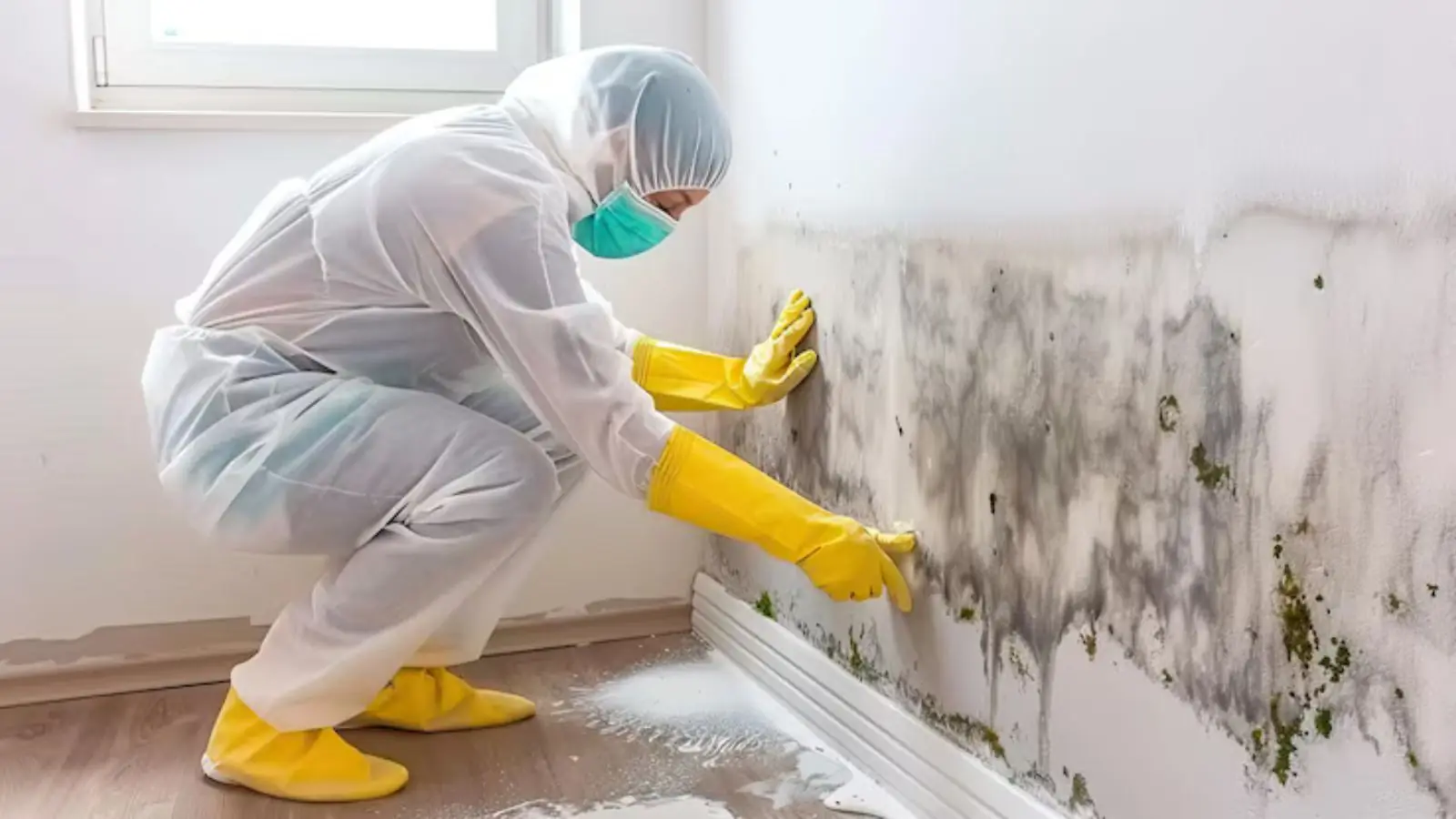
Why mold quotes differ so much
Two homes with the same visible spot can need very different work. One has a few damp square feet on a bathroom wall. The other has moisture inside the wall cavity and under the flooring, and the spot was the surface of a larger problem.
Mold needs moisture, so the cost cannot be separated from the water. If the leak is still active or the wet materials have not dried, a price is premature. A real number comes after the assessment, not before.
What you are paying for
This table breaks a mold project into the pieces that appear on a written scope. No prices appear here because they depend on your house, but the pieces stay the same.
| Line item | What it covers | What shifts it |
|---|---|---|
| Assessment and protocol | Inspection, moisture readings, sampling and a written plan from a licensed assessor | Home size, number of areas, whether sampling is needed |
| Containment | Plastic barriers, negative air machines and HEPA air scrubbers | Size of work zone, number of rooms sealed |
| Removal of materials | Cutting out and bagging affected drywall, insulation or trim | Drywall is quicker than framing or subfloor work |
| Cleaning and treatment | HEPA vacuuming, damp wiping and antimicrobial treatment on salvageable surfaces | Type of framing, accessibility |
| Drying | Air movers and LGR dehumidifiers until readings are normal | How wet the structure is, drying days |
| Post-remediation verification | Re-inspection and clearance testing against the protocol | Number of samples, area size |
| Rebuild | Drywall, insulation, flooring, paint | Finishes, matching, access |
Dealing with mold in your home?
Call the 24/7 line.
Area and materials set the base
Texas has a minimum-area rule, with an exemption for unlicensed persons cleaning up to 25 contiguous square feet. Above that size, licensing generally applies, and the work follows a written protocol. Even below it, the real question is whether moisture is still present.
Material type matters as much as size. Drywall and insulation are usually removed because mold grows into porous paper and fibers. Framing lumber is cleaned and dried rather than torn out, but cleaning wood takes more labor than tearing out a wall panel.
Crawl spaces, attics and tight corners add labor. Ask for the scope by room, with square footage and materials listed, so you can compare bids on the same basis.
Assessment and remediation are separate jobs in Texas
Texas licenses assessors and remediation contractors as separate trades, and one company cannot play both roles on a single job. The assessor writes the protocol, which states what is to be removed or cleaned and how clearance will be judged. The remediator follows it.
That separation is a feature, not an extra expense. The person who says what needs doing is not the person paid to do it. Ask for the license number of whoever bids the work and confirm it with the state.
When the work is done, a licensed remediator issues a Certificate of Mold Damage Remediation (CMDR). TDI also advises getting a certificate confirming removal and expecting an inspection that shows the cause was fixed. Keep it with your home records, since sales and loan files may ask.
Containment, verification and the rebuild
Containment protects the rest of the house. Plastic barriers and negative air pull dust through HEPA filtration, so spores are not spread to clean rooms. It adds setup and teardown time to the scope, which is a real cost, though it protects the rest of your home.
After cleaning, post-remediation verification checks the result against the protocol. Then the rebuild starts, covering the drywall, insulation, paint and flooring that were removed. Many mold quotes cover removal only, so ask whether the rebuild is included or separate, perhaps through water damage repair afterward.
Mold services follow ANSI/IICRC S520, the published standard for mold remediation. Ask any company whether its crews work to it. No honest company promises that mold will never return, because new moisture creates new risk.
Insurance often leaves mold cleanup out
TDI explains that mold on a covered damaged item is covered, but most policies exclude mold cleanup and testing after the damaged item is removed unless you added that coverage. Mold from a gradual leak is usually not covered at all. Ask your agent about a mold endorsement before you need one.
If the original water damage was covered, ask your insurer what they will pay and in what order. Keep photos, moisture logs and receipts. Check your policy and ask your insurer, because wording differs between policies.
The source decides whether the money is well spent
The most expensive mold job is the one done twice. If a roof, plumbing line or condensate line is still leaking, remediation will be followed by regrowth. Fixing the source, drying the structure and then cleaning is the order that holds up.
Start with water mitigation if there is still moisture in the building, then bring in the mold assessor. Sequence is the largest cost control you have.
Newer Little Elm homes: ask about a builder warranty path
Little Elm grew from 25,898 residents in 2010 to 46,453 in 2020, and many homes here are recent builds. Newer homes can still have moisture trouble from a roof detail, an AC condensate line or a window seal. If yours is young, a builder or manufacturer warranty may still apply.
TDLR exempts homebuilders working under a builder warranty from its mold licensing rules, which means the warranty path can differ from the usual process. Before you hire anyone, read your closing documents, call the builder in writing, and ask what they cover and what they require. Keep photos and dates either way.
If the warranty does not apply, or you need drying while you wait, our crews can help with the moisture first. For work near the lake, The Colony and Aubrey pages explain how we cover neighboring towns from our Little Elm base.
Frequently Asked Questions
Why can't I get a mold remediation price before an inspection?
Because area, materials, moisture and access are unknown until someone looks. A written protocol and scope make a number reliable. Be cautious of a flat price quoted sight unseen.
Can the same company test and remove the mold?
Not on the same job. The state treats testing and removal as two licensed roles, so plan on two companies and verify each one's license before work begins.
Does homeowners insurance pay for mold removal?
It depends on the cause. TDI says most policies exclude mold cleanup and testing after the damaged item is removed unless you added that coverage. Check your policy and ask your insurer.
What is a Certificate of Mold Damage Remediation?
It is the document a licensed remediator issues once the work is complete under the protocol. Keep it with your records, since buyers, lenders or insurers may ask for proof of clearance.
Does a builder in Little Elm handle mold under warranty?
Sometimes. Texas exempts homebuilders working under a builder warranty from the mold licensing rules, and Little Elm has many newer homes. Read your warranty and ask the builder in writing before you hire someone else.